


Destination
PolskaPoland
I knew nothing about it.15 stories · Warsaw · one month · September 2018
Poland was the third country of my backpacking trip, after Greece and Spain, and the only one I chose because I could not tell you a single thing about it. I arrived on a one-way ticket with no Polish and, as it turned out, no idea what the currency was. A month later I was sprinting through the wrong airport with three minutes to spare.
Warsaw
Nine chapters, in the order they happened.
Fifteen posts, written between 2018 and 2020, grouped here the way the month actually ran — from a difficult first night in a suburb I could not find my way out of, to a plate of pierogi I still think about.
I picked the one country I could not tell you a thing about.
DecyzjaAfter the tomato fight in Buñol it was time to move on from Spain. Jorge was running out of days before his Masters started in Madrid, and I had to choose a third country. It was the hardest decision of the trip so far, because whatever I chose, the two of us were about to be thousands of miles apart again.
I ruled it out and ruled it back in. Poland was cheap to fly to, cheap to live in, and I had never been to that part of Europe. And there was one more reason, which I put in the post at the time and still think is the best reason I have ever had for going anywhere:
“I had no idea what the country was all about and I hated that I knew so little about its history. That was exactly how I decided Poland was where I needed to go next.”
The route by that point made a very odd triangle across the continent — Athens, then Spain, then straight up to Warsaw. I was choosing countries on curiosity, cost and whether I thought I would feel safe, not on where they happened to be.
The first thing I noticed about Poland I noticed from the plane: the greenery. Trees and parks everywhere, far more than I was used to at home. It helped, a little, with the anxiety that was building as we came down.

The first two days went badly. All of them.
Trudny początekI booked a month in one Airbnb because it was cheap and because I knew I would need time to readjust to being on my own again. Then I checked in and realised where it was.
“I was so far removed from civilization that I found it hard to believe I was even ‘in’ Warsaw.”
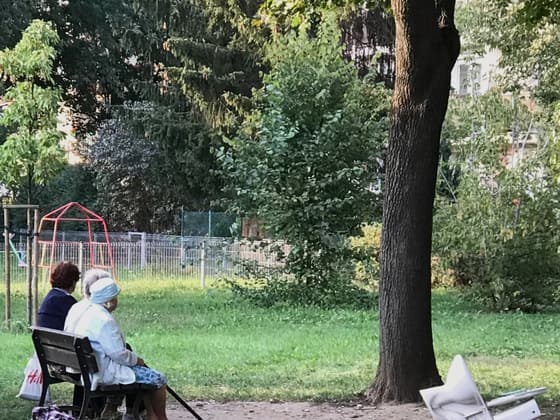
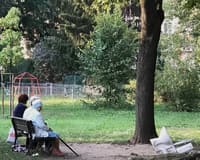
Trees and retirees in every direction, no working data on my phone, no idea where to buy food. I walked a path lined with nothing but trees, crossed a bridge, and eventually found a supermarket. That is where the evening got worse.
The cashier rang up my items and said a number followed by a word I did not know. I was already holding a twenty euro note.
“Huh, excuse me? Did you say ‘swoty’? I’m sorry, do you speak English? …Oh my goodness, is ‘swoty’ your currency in Poland?”
It is. The złoty. Poland is in the European Union and has never been in the eurozone, and I had flown there without knowing. My travel credit card saved me. The cashier then spent a full minute comparing my signature to the back of the card — nobody in Poland signs anything, the chip-and-PIN there was years ahead of what I had — and handed me my bag with a parting line I have never forgotten.
“You may have problems here in Poland.”
I walked home in the cold nearly wanting to cry. It was also the first day I had spent apart from Jorge since Greece, which did not help.
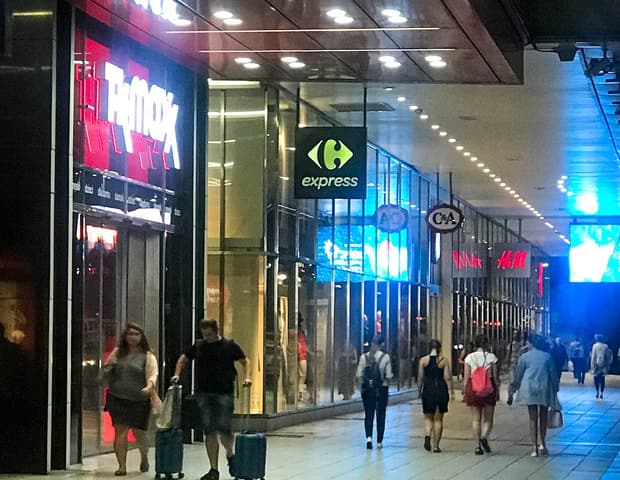
I found a small Carrefour Express much closer to the flat, which would have saved me the entire walk the night before. Inside, every label was a wall of Polish. I translated cooking instructions with my phone and left with a basket containing lentil soup, chicken tikka masala, chicken vindaloo and a vegetable curry, plus one tub of barszcz I bought purely because it looked easy.
That night the only restaurant I could find open within walking distance was Indian. So I walked twenty-five minutes to eat the same chicken tikka masala that was already sitting in my fridge. I have made peace with this.
“When will I get to finally try some authentic Polish food?”
 Blog post
Off to a Rough Start Traveling Alone in Poland
You may have problems here in Poland.An Airbnb in the middle of nowhere, a currency I had never heard of, and a cashier who wished me luck.Read the story Blog post
Did I Fly to Poland to Eat Indian Food? Apparently, Yes.
When will I get to finally try some authentic Polish food?Day two. One small Carrefour, a basket full of chicken tikka masala, and a 25-minute walk to eat the same thing again.Read the storyThen I found the Old Town, and the city started to make sense.
Stare MiastoThe Old Town is the first place most people go in Warsaw, and it became the place I kept going back to. Squares, pastel fronts, a castle, a column. What took me a while to understand is that almost none of it is old.
UNESCO inscribed the historic centre in 1980 for exactly that reason: more than 85 per cent of it was destroyed during the 1944 Uprising, and then rebuilt over five years by the city’s own citizens, working from paintings, photographs and memory. You are walking through a reconstruction, and that is the point of it.
Sigismund’s Column has stood in Castle Square since 1644, put up by Władysław IV for his father, the king who moved Poland’s capital here from Kraków in 1596. It was badly damaged in the war too. It was also rebuilt.
The Syrenka — the sword-and-shield mermaid on Warsaw’s coat of arms. She is all over the city once you start looking.
 Blog post
5 Things to See and Do In Warsaw’s Old Town
The Old Town was one of my favorite places to explore!The Market Square, the Royal Castle, the column, the palace and the first proper Polish meal.Read the story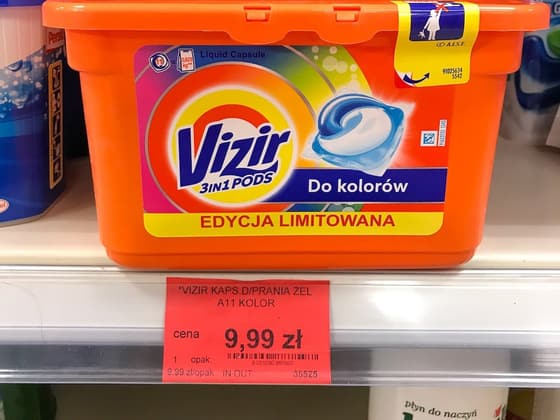 Blog post
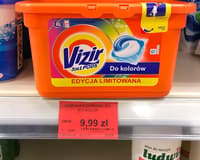
3 American Brands That Have Other Names in Poland
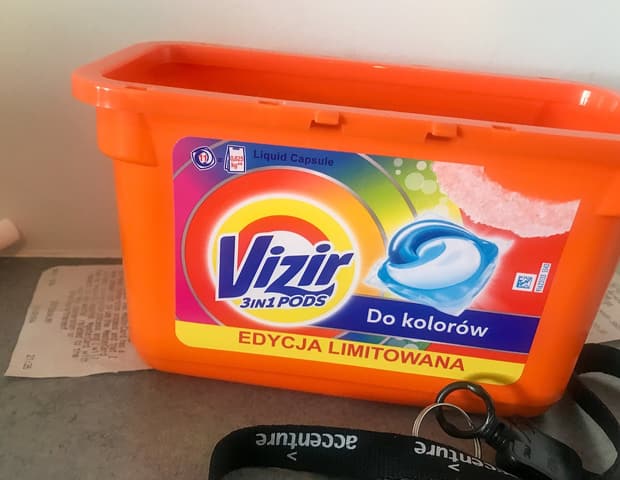
Instead, it turns out Vizir is Tide.T.K. Maxx, Vizir and Pan Proper: three shelves that made me stop and stare.Read the storyThree brands I almost did not recognise.
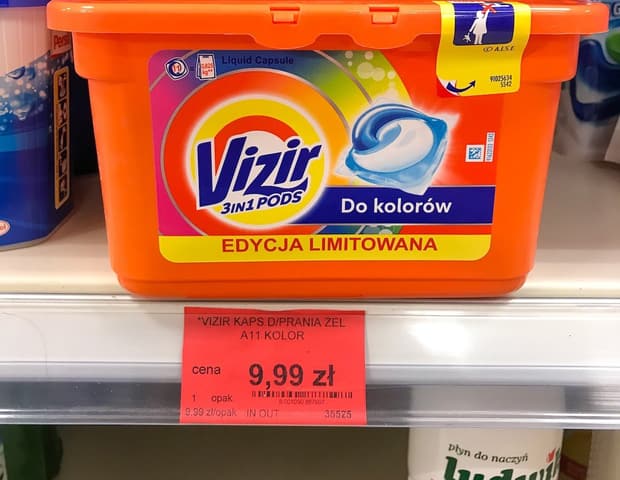
One weekend left, so we spent it here.
SpotkanieI had been in Warsaw a week or two, learning how the city worked, when Jorge messaged to check in. We worked out that he had exactly one free weekend before his Masters started. Flights from Spain were cheap.
“Screw it, let’s meet again.”
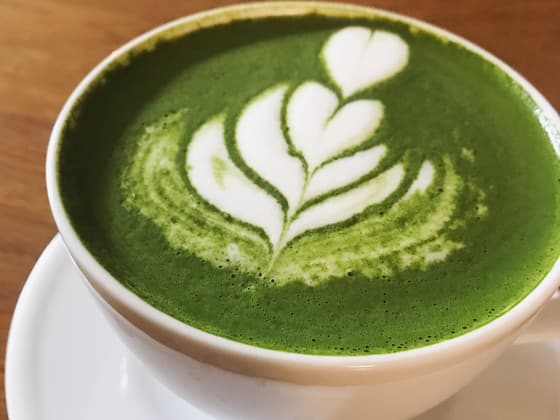
He came for four days and it changed the whole month. I wrote afterwards that it was the highlight of my stay, and that from the day he arrived I had a much more favourable outlook on Warsaw. All it took was a little familiarity. He introduced me to a friend of his who lives in Poland, we spent an afternoon in a cafe in a very hipster neighbourhood, and I had the first proper matcha since I left the States. Then the outdoor market we went to got rained out.
There is a line in that post I still stand by, and it is the honest version of what a month alone in a city where you know nobody is actually like:
“I’m an introvert so my own company is usually more than enough but day after day of not seeing a single familiar face can get tough.”
The goodbye at the end of those four days was harder than the one in Spain had been, because by then I had nearly used up my 90 days in the Schengen zone and could not follow him back. That detail turns up again in the last chapter, in the worst possible way.
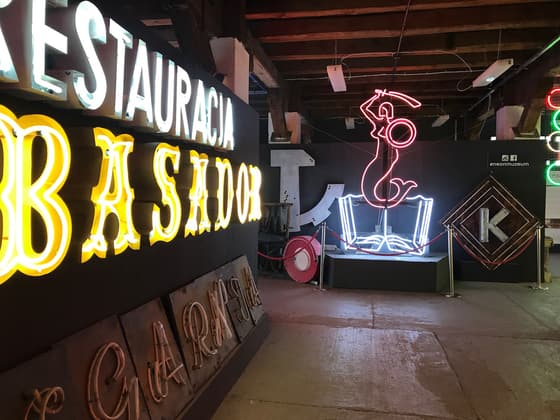
A warehouse full of Cold War light.
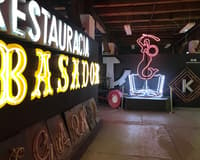
NeonyWith one free afternoon, Jorge and I went to the Neon Muzeum — the largest collection of Cold War era neon signs in the world. The museum hunts these signs down, and whenever one surfaces it tries to get hold of it so it can be rescued, restored and lit again.
My favourite was the tall Mydła i Farby sign, roped off with a warning not to touch it. I looked it up afterwards. It advertised a Soaps and Paints shop that never opened. The sign hung for decades pointing at a business that did not exist.
“Signs are symbols. With time, they become landmarks that we recognize and orient ourselves with.”
Entry was 10 zł in 2018, about two dollars fifty. It is one of the best cheap hours in the city.
Switch on the neon.
Eight signs drawn the way Warsaw’s were: bent tubing, one animal, one arrow, one word. Nothing here copies a real sign — these are my own, in the same idiom. Flick them on.
Warsaw ran a whole programme of it. Neonizacja put light on the rebuilt streets after the war.
Shops, bars and cinemas each got their own creature. The museum hunts them down when one surfaces.
Kwiaty means flowers. I photographed the real one; this is a drawing in the same idiom.
Coffee. The tubes were bent by hand, and a restored sign is bent by hand again.
Half of these signs were directions. Turn here. Down the stairs. Open late.
An outline animal in glass tubing, the kind of thing a state enterprise commissioned in 1960.
When a sign is rescued it is cleaned, rewired and lit again rather than left dark.
The museum is the largest collection of Cold War era neon signs in the world.
One thing to know before you go: the museum has moved. It is no longer at Soho Factory where I saw it — since July 2025 it has been on the fourth floor of the Palace of Culture and Science. Details are in the planning panel below.
I went to Poland and fell for the corvids.
PtakiI lived beside a huge park, and there was a black-and-white bird everywhere I looked that I could not name. It resembled a crow, and it clearly was not one. It was a Eurasian magpie, and it is one of the most intelligent animals on the planet.
Magpies are one of the very few species other than humans to pass the mirror test for self-recognition — the club is great apes, dolphins, orcas, one elephant, a cleaner wrasse, and this bird. They are also extraordinary mimics. And when one finds a dead magpie it calls until dozens gather, and they vocalise together for up to fifteen minutes before flying off in silence.
“They resembled ravens or crows, yet somehow they were different.”
Sroka — Pica pica. Which, as I noted at the time, gives me Pikachu vibes.
I always carry food for birds. Birdseed was hard to find in Warsaw, so I bought a packet of unpopped popcorn kernels at a supermarket and fed the pigeons with those on my way out each morning. The magpies stayed well back. Then one morning a hooded crow dropped in and started loading its beak with as many kernels as it could hold.
I watched it walk about pushing its beak into the ground and assumed it was after insects. Then I saw a yellow kernel disappear into the mud. It was not foraging. It was hiding them, one at a time, and then flying off.
“It was so intentional and strategic.”
Crows cache food routinely and remember exactly where they put it, even buried. I had read that. Watching it happen a metre away is a different thing entirely.
The last one was smaller. Red-and-black insects were all over the pavements and I could not identify them. I searched “black and red insect with two dots on its back” and got ladybirds. Then milkweed bugs, which were close but wrong. Then box elder bugs, also wrong. Jorge suggested a name that turned out to be stink bugs, which I closed immediately, because I am genuinely afraid of stink bugs in flight.
Then he sent a screenshot of the answer at the same moment I was sending him my comparison chart. European firebug, Pyrrhocoris apterus. After that I smiled at them every day.
 Blog post
In Poland, I Met One of the Smartest Birds in the World
They resembled ravens or crows, yet somehow they were different.The bird I kept seeing everywhere turned out to be one of the only animals on Earth that recognises itself in a mirror.Read the story Blog post
The Hooded Crow from Eastern Europe Hides Its Food for Later
It was so intentional and strategic.I thought it was hunting for insects. It was burying the popcorn kernels I had just given it.Read the story Blog post
Finding My First European Firebug in Poland
That was it! The two black circles!A red-and-black insect on the pavement turned into a genuine identification quest, solved by Jorge.Read the storyThe best night out I have ever had.
NocąWarsaw in 2018 was a city where Jorge and I went around looking like two friends travelling together, and that constant alertness is tiring in a way that is hard to explain. I wrote it plainly at the time: as a gay couple’s trip, Warsaw would not be my first pick.
And then there is the other half of it, which surprised me completely. We searched for gay bars and found almost nothing on the map. One place, Lodi Dodi, whose entrance was so wrapped in construction that we nearly walked away before spotting the side door. The bartender there sent us on to Metropolis Warszawa.
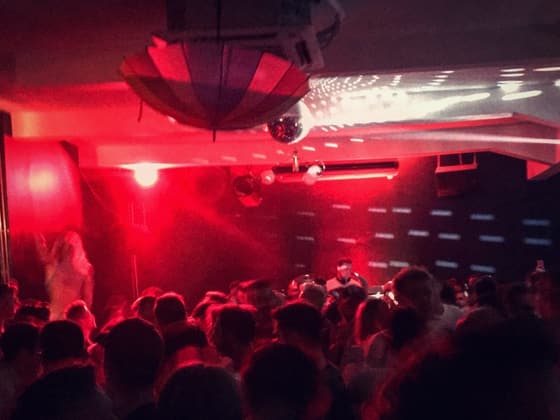
“Metropolis was the best gay club I’ve ever visit. Ever.”
My theory, then and now: when it is harder to be yourself in daylight, the weekend does more work. Everyone dropped their guard at once. It was the most welcoming room I have ever danced in.
A few weeks later, on a Friday, I decided to go out alone for the first time in my life. I picked Metropolis precisely because I had already been there and could picture the inside, which made the queue survivable.
“An introvert… clubbing solo. Something about that sentence almost seems paradoxical.”
I got there far too early. Empty bar, a few groups on a sofa, nobody on the dance floor. I read the drink menu three times to make ordering last as long as possible, got a tatanka — vodka and apple juice, sometimes called a Polish Kiss — and refused to look at my phone, because a phone makes you look less approachable and I had come to meet people.
Then it filled up all at once, and the whole place changed in about four minutes. I am still in touch with one of the guys I met that night.
What I wrote in 2019 is not the whole picture in 2026. Some of it has changed a great deal and some of it has not moved at all — there is a sourced summary in the planning panel below.
 Blog post
Is Warsaw, Poland a Gay-Friendly Travel Destination?
Metropolis was the best gay club I’ve ever visit. Ever.The honest answer about being a gay traveller in Warsaw in 2018, and the nightclub that still has no equal.Read the story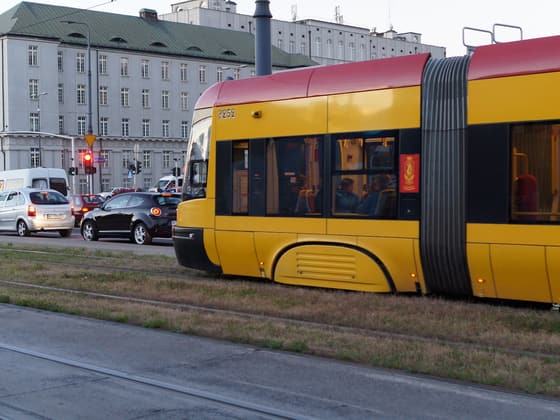 Blog post
Solo Travel: My First Time Going Out Clubbing Alone
An introvert… clubbing solo. Something about that sentence almost seems paradoxical.An introvert, a queue, an empty room at midnight, and the moment everything changed.Read the storyAnd eventually, a great deal of pierogi.
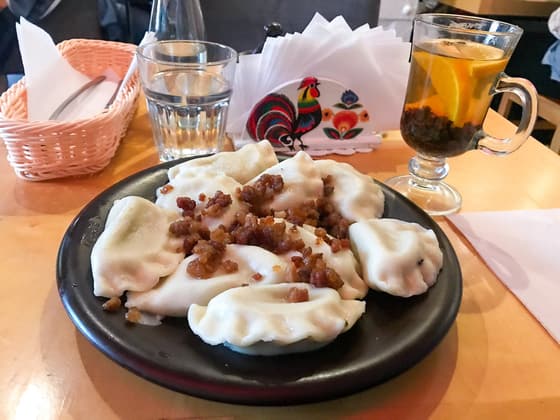
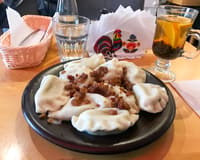
Do stołuThe chicken tikka masala phase did not last. By the end of the month pierogi were a staple, and the thing that genuinely surprised me was how many kinds there are.
Savoury is what you expect — potato and cheese, cabbage and mushroom, meat, fish. Then I found strawberry ones in a supermarket freezer, and blueberry ones that come out of the pot an unapologetic purple. Sweet pierogi are not unusual at all; raisins and cottage cheese are standard fillings.
“Something I learned in Poland is that there are so many different kinds of pierogies!”
My restaurant was Zapiecek Polskie Pierogarnie, and the thing I recommend by name is the salmon pierogi with Camembert. A plate was 30 to 38 zł in 2018, roughly eight to ten dollars.
Six fillings, all of them correct.
Ten things I would tell you to eat and drink.
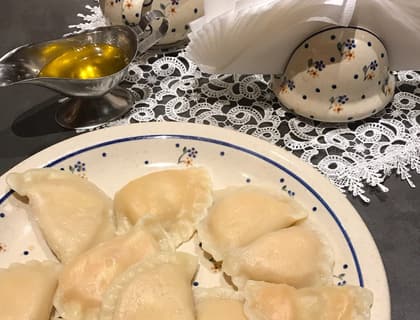 PierogiDumplings
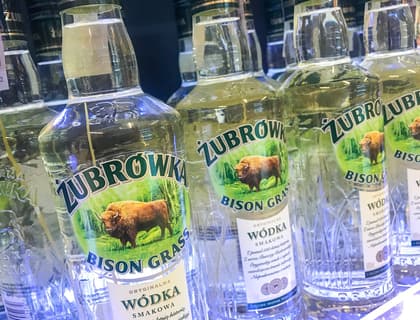 ŻubrówkaBison grass vodka
 BarszczBeetroot soup
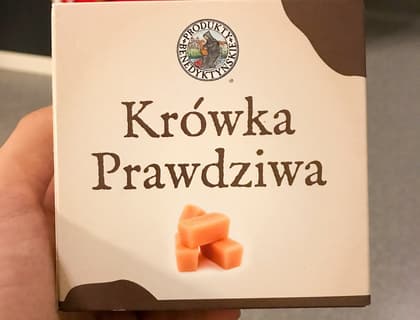 KrówkiLittle cows
 PączkiRose doughnuts
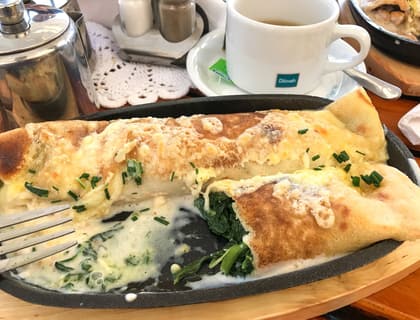 NaleśnikiCrepes
 Herbata z rumemTea with rum and cloves
 ŚliwkaChocolate plums
 Miód pitnyDrinkable honey
 KiełbasaSausage
Żubrówka is the one worth knowing about: the bottle with the blade of bison grass in it cannot legally be sold in the United States, because the grass contains coumarin and US food rules still prohibit it. What you buy at home is a coumarin-free rye version. If you want the original, you have to go to it.
A very narrow house, and a very bad morning.
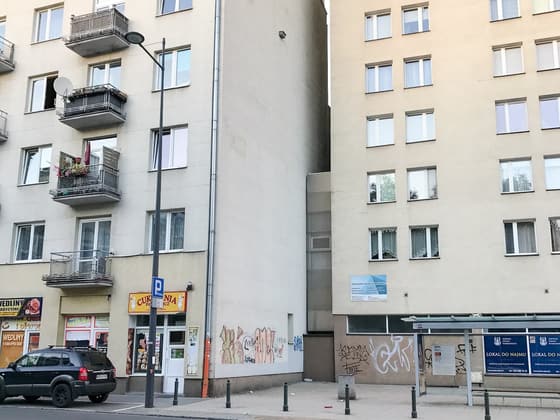
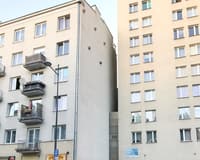
Ostatni dzieńI spent my last day at the Keret House, the narrowest house in the world: 60 inches across at its widest and 36 at its narrowest, slotted into what used to be an alleyway between Chłodna 22 and Żelazna 74.
It is officially an art installation, because it does not meet Poland’s residential building code, and it is lived in anyway. Two floors, a bedroom, a kitchen, a bathroom, a ladder between levels, and a retractable staircase that becomes the living area when it folds away. It is named for the Israeli writer Etgar Keret, its first tenant, who has said staying there is like a memorial to his family; both his parents’ families died when Nazi Germany occupied Poland.
The architect Jakub Szczęsny chose the spot deliberately. It sits where a pre-war brick building meets a post-war concrete block, and where the large ghetto and the small ghetto met. A footbridge between the two sealed areas stood a few steps away.
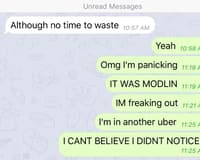
My 90 days in the Schengen zone were nearly gone, so I booked a flight out in a hurry and picked Croatia. I went to Chopin airport early, planning to check in, find the gate and have a sandwich. I could not find the Ryanair desk. I circled every counter. I checked the self-service screens. Nothing.
“Sir, I’m afraid RyanAir is only located at Warsaw’s Modlin Airport.”
Modlin is a different airport, 40 kilometres out. My boarding pass said so. I had told myself “Chopin” so many times that I had read straight past it. Jorge had flown out of Modlin days earlier, so I knew perfectly well both existed.
Second Uber, motorway accident, standstill traffic, one check-in agent working a long queue. I arrived at 12:35 for a gate that closed at 12:55. Modlin is tiny, which is the only reason this story has a happy ending. I boarded at 12:52.
 Blog post
The Keret House in Warsaw is the Narrowest House in the World
Visiting the Keret House is how I chose to spend my final day in Warsaw, Poland.Thirty-six inches wide at its narrowest, wedged into an alleyway where two ghettos once met.Read the story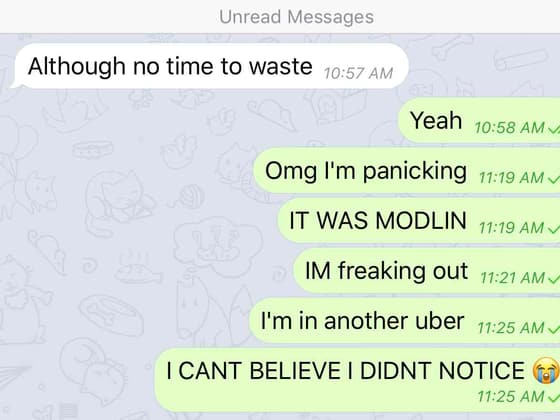 Blog post
Here’s Why You Should Never Rush While Booking a Travel Itinerary
Sir, I’m afraid RyanAir is only located at Warsaw’s Modlin Airport.I went to the wrong airport. I boarded with three minutes to spare.Read the storyPlan your own month in Warsaw.
My trip was 2018, so every price in the stories above is a 2018 price. Here is what I could verify for 2026, with the sources, including one thing that has moved and one thing you can no longer book.
Then and now| What | 2018 | 2026 | Note |
|---|---|---|---|
| Neon Muzeum, adult entry | 10 zł | 25 zł | and the museum has moved – see below |
| Pączek at Cukiernia Pawłowicz | 3.5 zł | still open, price unconfirmed | |
| Pierogi plate at Zapiecek | 30-38 zł | 25-36 zł | menu listing dated Dec 2025 |
| Naleśniki, two, city centre | 26 zł | — | Gościniec, Old Town |
| Keret House, 15-minute tour | 25 zł | no regular tours | free to see from the street |
| Single tram or metro ride | — | 4.40 zł | 75 minutes, Zone 1 |
About 3.77 zł to the US dollar in September 2026.
Poland is in the European Union and not in the eurozone. About 3.77 zł to the US dollar in September 2026. Cards are accepted almost everywhere and contactless is the norm.
XEUS passport holders still enter Poland visa-free for up to 90 days in any 180-day period across the whole Schengen area. Since 10 April 2026 the EU Entry/Exit System has been fully operational, so your face and fingerprints are registered at the border instead of your passport being stamped.
European CommissionThe EU travel authorisation is not live yet. It is expected in the last quarter of 2026, with a transition period after launch. The fee was raised from 7 to 20 euro in July 2025, and plenty of guides still quote the old number.
European CommissionRemote workers use a temporary residence permit for self-employment, a D-type national long-stay visa, or Poland Business Harbour if they qualify. For a month like mine, visa-free entry is the whole answer.
RemoteTaxCalcWarsaw runs Open Payment: touch any contactless card or phone at a metro gate or a bus and tram validator and it charges the cheapest fare, capped at 15 zł a day. Jakdojade is the local routing app.
warsawmetro.org20 minutes 3.40 zł. 75 minutes 4.40 zł. 24 hours 15 zł, or 26 zł if you need Zone 2. A 90-minute Zone 1+2 ticket is 7 zł.
Go2WarsawA normal 4.40 zł ticket covers the train to Centralna or Śródmieście in about 20 minutes. Bus 175 takes about 40. A taxi is 45-60 zł.
Warsaw.netLearn from me. The Koleje Mazowieckie Airport Ticket is 20 zł one way and covers the shuttle bus from the terminal, the train into Warsaw and a Zone 1 transfer. The direct Modlin Bus to the Palace of Culture is about 36 zł and takes 45 minutes.
Koleje Mazowieckie Modlin AirportIt is no longer at Soho Factory on ul. Mińska where I saw it. Since July 2025 it has been on the fourth floor of the Palace of Culture and Science, entrance from Marszałkowska. Adult entry 25 zł, concession 18 zł, open daily, 11:00 to 18:00 and to 19:00 on Friday and Saturday. Guides that still send you to Praga are out of date.
Neon MuzeumIt still stands between ul. Chłodna 22 and ul. Żelazna 74 and it is free to see from the street. There is no regular public tour any more; the Polish Modern Art Foundation opens it occasionally and tickets are scarce. The 25 zł fifteen-minute tour I got in 2018 is not something you can book today.
In Your PocketUNESCO inscribed the historic centre in 1980 precisely because more than 85 per cent of it was destroyed and then rebuilt from paintings, photographs and memory by the city’s own citizens. Sigismund’s Column went up in 1644 under Władysław IV, for the father who moved the capital from Kraków in 1596.
UNESCOZapiecek still runs several Old Town branches, with pierogi plates around 25-36 zł. Pawłowicz on Chmielna 13 still turns up in the best-pączki lists. Go early. The queue is real.
Warsaw NowI wrote that Warsaw was safe to be gay in as long as you were discreet, and that Jorge and I explored the city looking like two friends travelling together. Some of that has changed and some of it has not, so here is where things actually stand.
At their height in 2020 there were 104 of those municipal resolutions, covering more than a third of the country. The last one, in Łańcut County, was repealed on 24 April 2025. There are none left.
Kampania Przeciw HomofobiiThe Sejm passed a “closest person” bill on 29 May 2026 covering joint property, tax, medical information and inheritance. President Karol Nawrocki vetoed it on 17 July 2026, and the coalition does not have the three-fifths majority to override him. Poland remains one of the last EU states with no legal recognition for same-sex couples. Separately, after an EU court ruling, Warsaw and Wrocław have begun transcribing same-sex marriages contracted elsewhere in the EU. That part is still moving.
Notes From Poland EuronewsILGA-Europe’s 2026 Rainbow Map puts Poland 39th of 49 European countries at 22 per cent, third from the bottom in the EU. Warsaw is a long way more liberal than that number suggests, hosts the Equality Parade, and a 2025 survey found 62 per cent of Poles now back legal partnerships. Metropolis Warszawa still opens Friday and Saturday nights, and Lodi Dodi on ul. Wilcza is still listed. Both are worth checking the same week you go.
ILGA-Europe Travel GayAll 15 Poland stories, in one place.
 01 · The decisionMaking Plans to Travel Solo to Warsaw, Poland
 02 · A rough startOff to a Rough Start Traveling Alone in Poland
 02 · A rough startDid I Fly to Poland to Eat Indian Food? Apparently, Yes.
 03 · Learning Warsaw5 Things to See and Do In Warsaw’s Old Town
 03 · Learning Warsaw3 American Brands That Have Other Names in Poland
 04 · The reunionThe Crazy Things You Do For Love When You’re in a Long Distance Relationship
 05 · The neonThe Neon Museum in Warsaw, Poland Was Lit
 06 · The birdsIn Poland, I Met One of the Smartest Birds in the World
 06 · The birdsThe Hooded Crow from Eastern Europe Hides Its Food for Later
 06 · The birdsFinding My First European Firebug in Poland
 07 · After darkIs Warsaw, Poland a Gay-Friendly Travel Destination?
 07 · After darkSolo Travel: My First Time Going Out Clubbing Alone
 08 · The table10 Foods & Drinks You Must Taste While in Poland
 09 · The last dayThe Keret House in Warsaw is the Narrowest House in the World
 09 · The last dayHere’s Why You Should Never Rush While Booking a Travel Itinerary
Nothing matches that. Try “pierogi”, “neon” or “magpie”.
Next stop: Croatia.
Warsaw was the hardest month of the trip and the one I quote the most. I arrived knowing nothing, which was the entire point, and left with a currency I could pronounce, a bird I could name, and a very firm opinion about salmon pierogi.
This month took place in September 2018, and the fifteen posts were published between 2018 and 2020. The stories describe that trip; prices, venues and opening hours in them are 2018 prices. Everything labelled 2026 above is sourced and linked.