


Destination
Croatiaa month by the sea.
12 stories · Zadar and Šibenik · October 2018
I came here because my ninety days in the Schengen Zone had run out and Croatia was cheap and outside it. I left twenty-eight days later having picked 450 pounds of olives with a family who fed me lunch, and having made friends with two wild pigeons whose names I still say out loud. This is all of it, in order.

Twenty-eight days in one small city on a peninsula.
I did not plan any of this. Pick a day to jump to what happened on it — or just scroll, because the page runs in the order the month did.
The twenty-eight days
October 2018. A coral olive marks a day my own posts actually pin down.Somewhere in the same four weeks
These my posts place inside the month, but not on a day.I came to Croatia because I had to.
Ninety days of free movement had run out, Croatia was outside the Schengen Zone, and the flight was cheap.
I had been in Poland for thirty days and I had not had a good time there. I needed the next place to work. So when a cheap flight came up to a city I had never heard of, I shrugged and booked it about 48 hours after I started reading about it.
What I knew: it was a peninsula, it was on the sea, and Instagram said there was something there called the Greeting to the Sun. What I did not know: that it would end up being the country that changed me most.
“I so desperately needed Croatia to be a positive experience for my mental health and wellbeing.”
It was. Immediately. I have never had a better first impression of anywhere.
From the blog · ZadarRevisiting Brighter Times… My Month in Zadar, CroatiaWhy a country I knew nothing about became the one that changed me most.Read the story 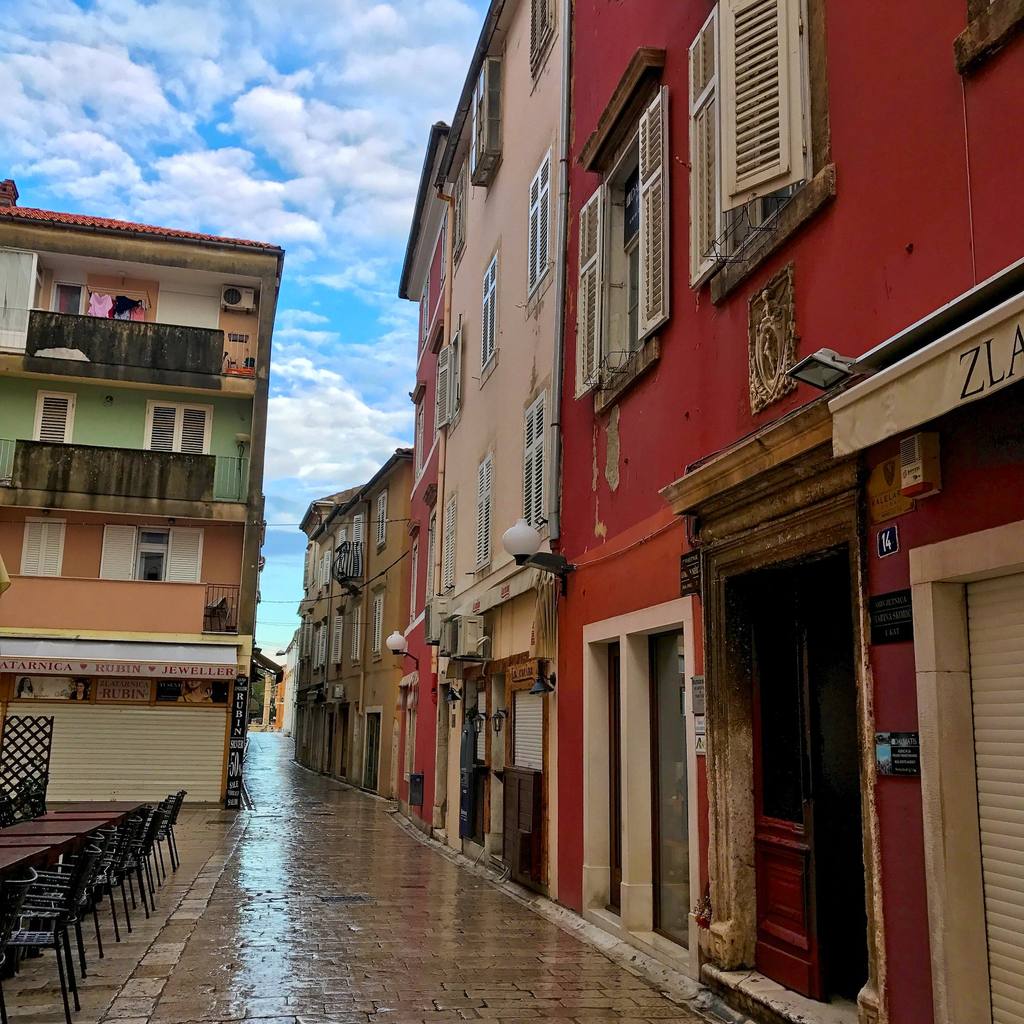
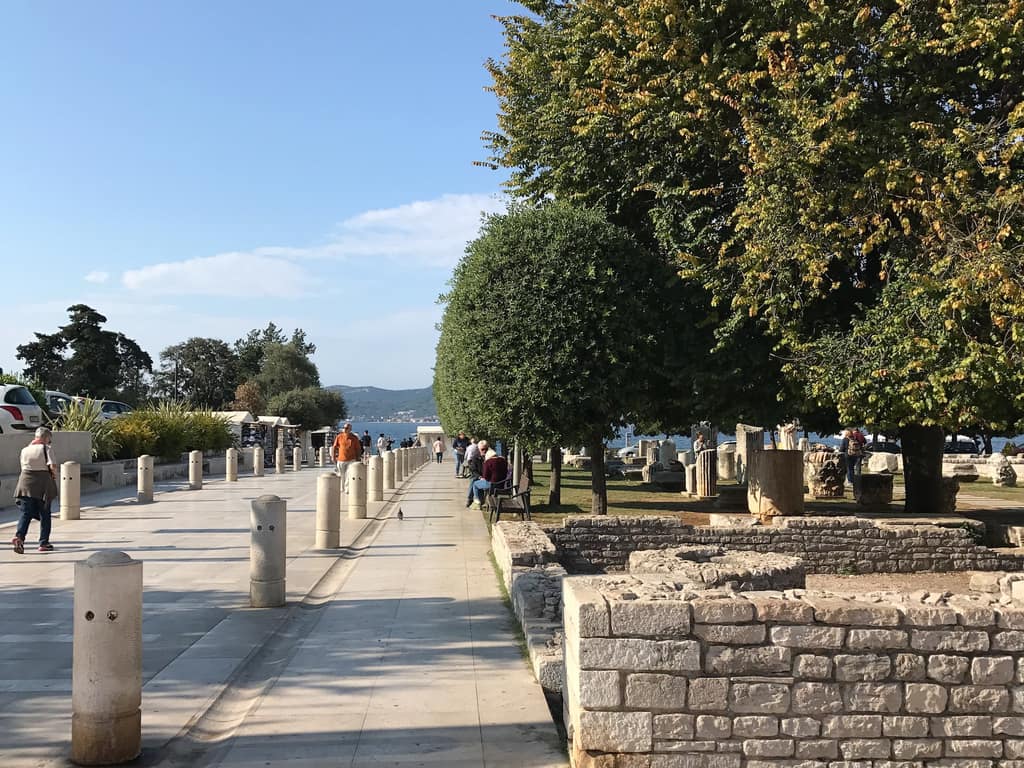
A greeting to the moon.
I came to Zadar mainly to see one thing light up. It was switched off the day I arrived.
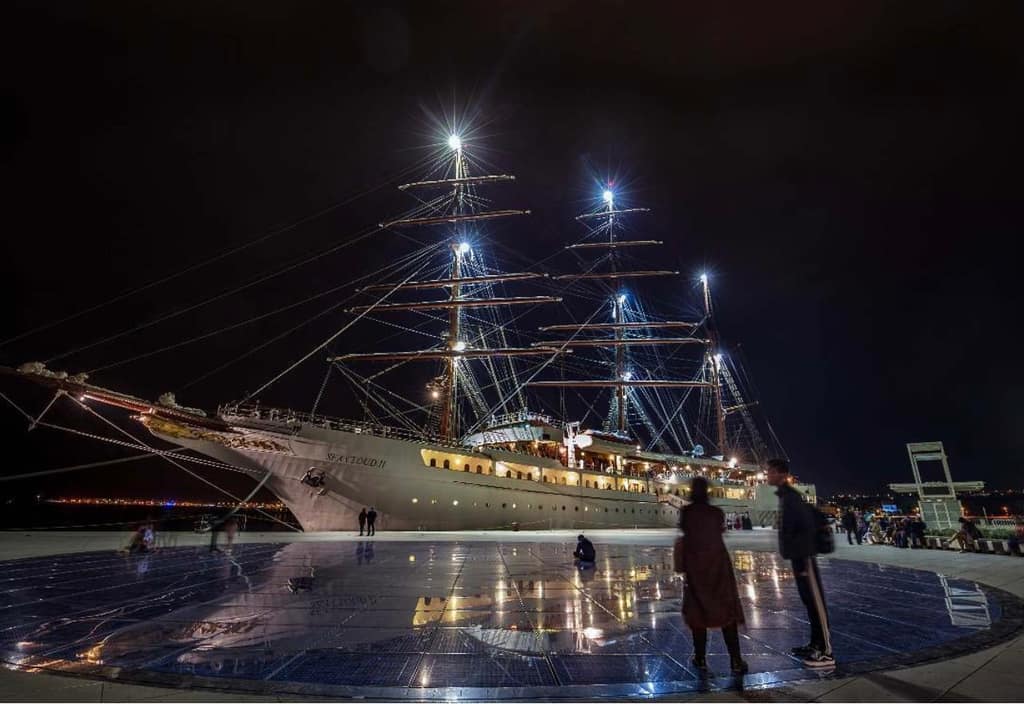
Claro took this. It is the only photographic proof I have that I stood on the Greeting to the Sun.
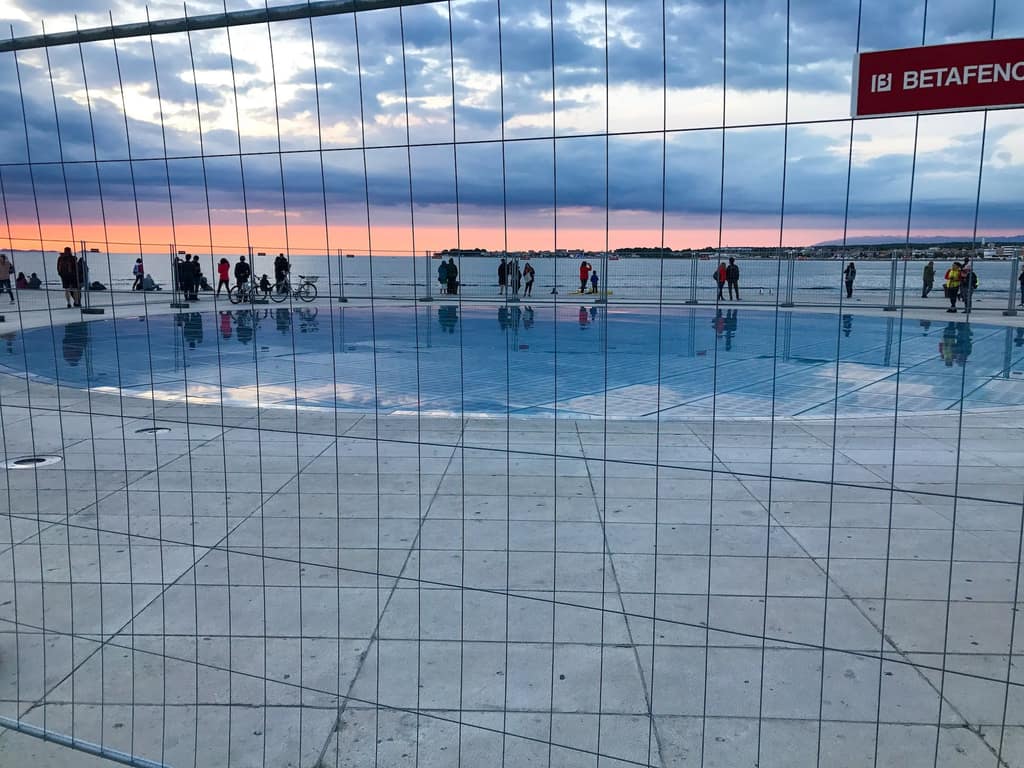
Three hundred glass panels, twenty-two metres across, and not one of them on.
I sat down with a book positioned so the monument was just above my line of sight, ready for the moment the lights kicked in. The sun set. Nothing happened. A ship docked beside me and people in traditional Croatian dress danced on the quay, and still nothing happened.
That is when I met Claro and Liway, an Australian couple who had come for exactly the same thing. We stood there talking about cockatoos and kangaroos under a very large moon, and it turned into one of the most memorable conversations of the whole trip.
“When I heard the monument was called the Sun Salutation, I never considered that a salutation could mean “goodbye” just as much as it can mean “hello.””
I went back the next night. And the next. As of 2 October 2018 you could not even walk on it — I had arrived the same week they fenced it off for a four-million-kuna repair. I went back every single night anyway, for twenty-eight nights, and it never came on.
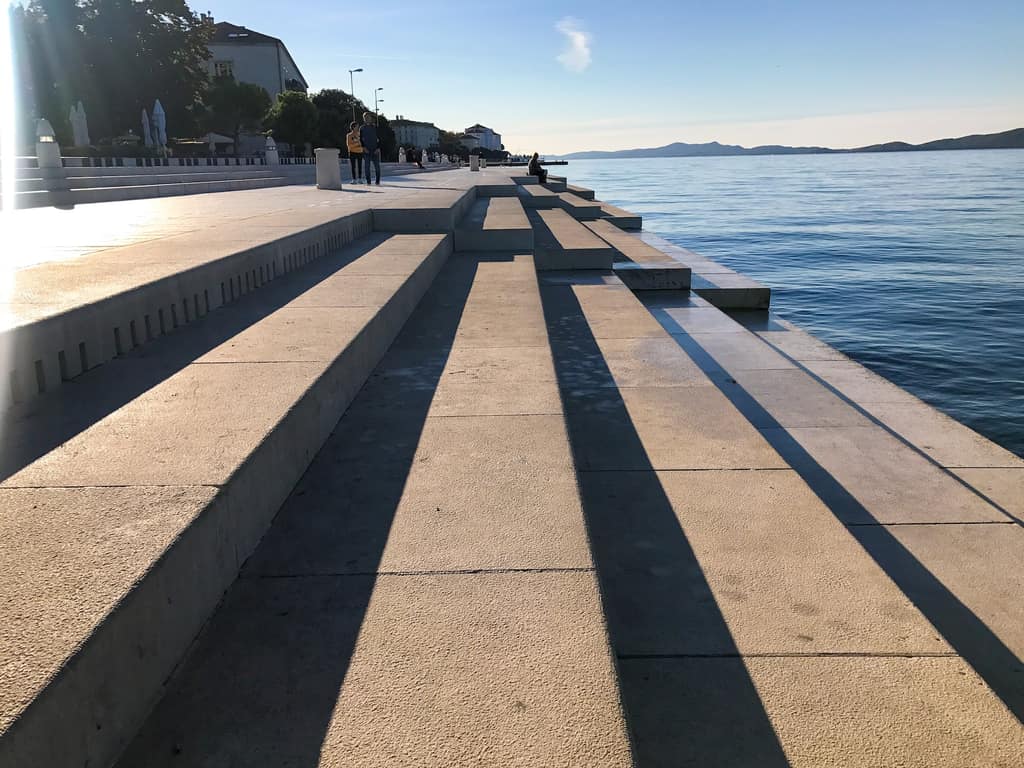
The other one worked. It still does.
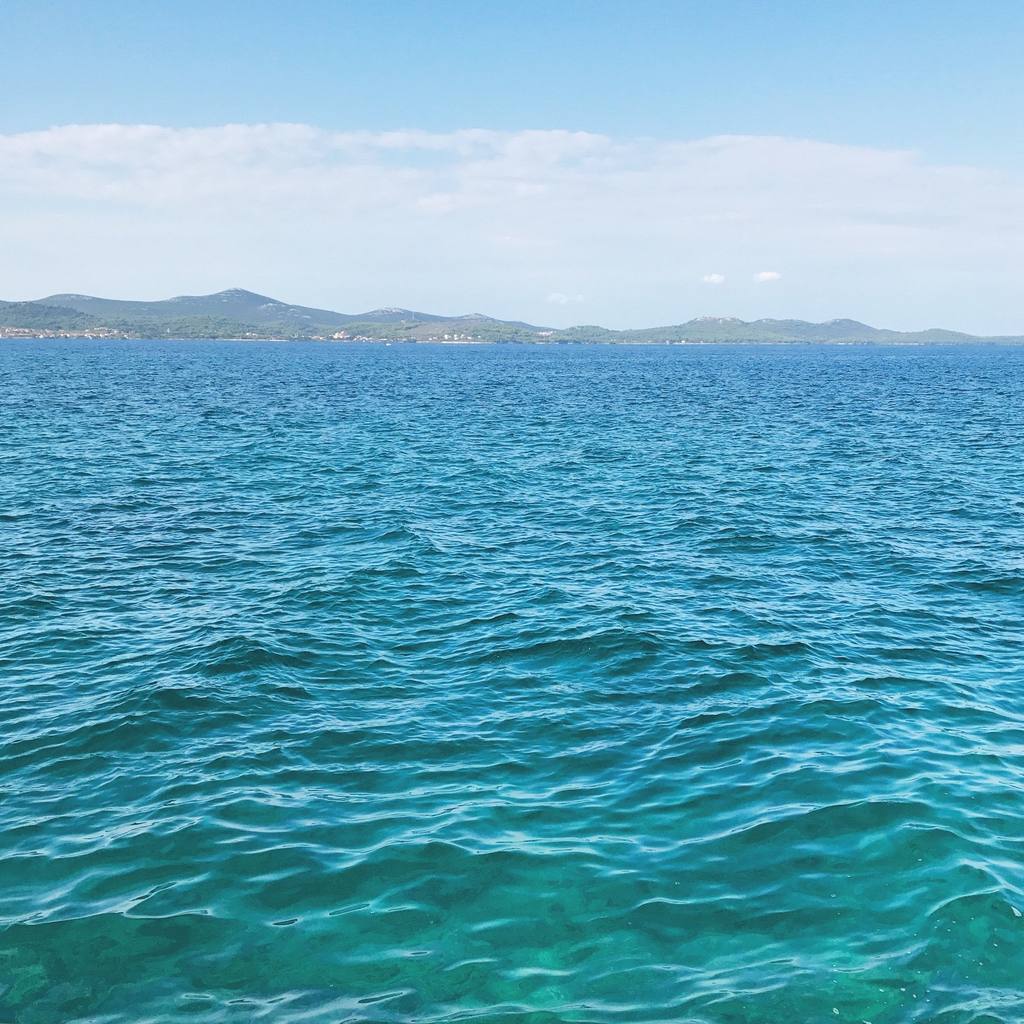
Thirty-five pipes cut into the pavement, played by the Adriatic, for free, around the clock.
Nikola Bašić built both of these. The Greeting to the Sun connects nature to light. The Sea Organ connects nature to sound. One of them was behind a fence all month; the other one could not be switched off if you tried.
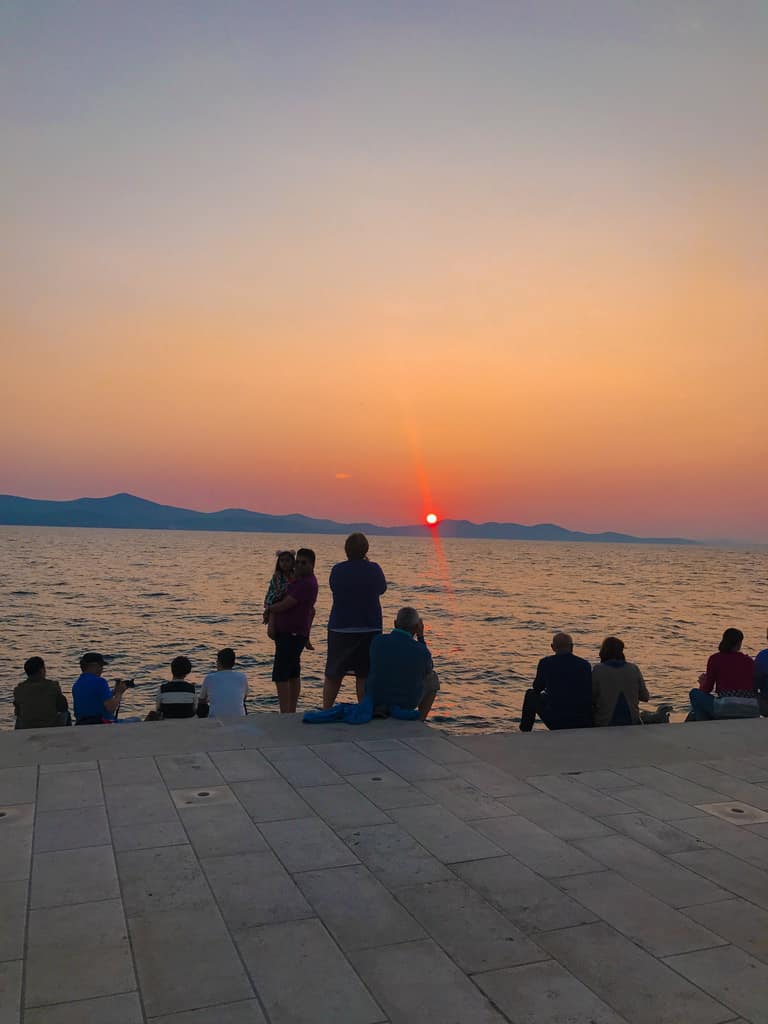
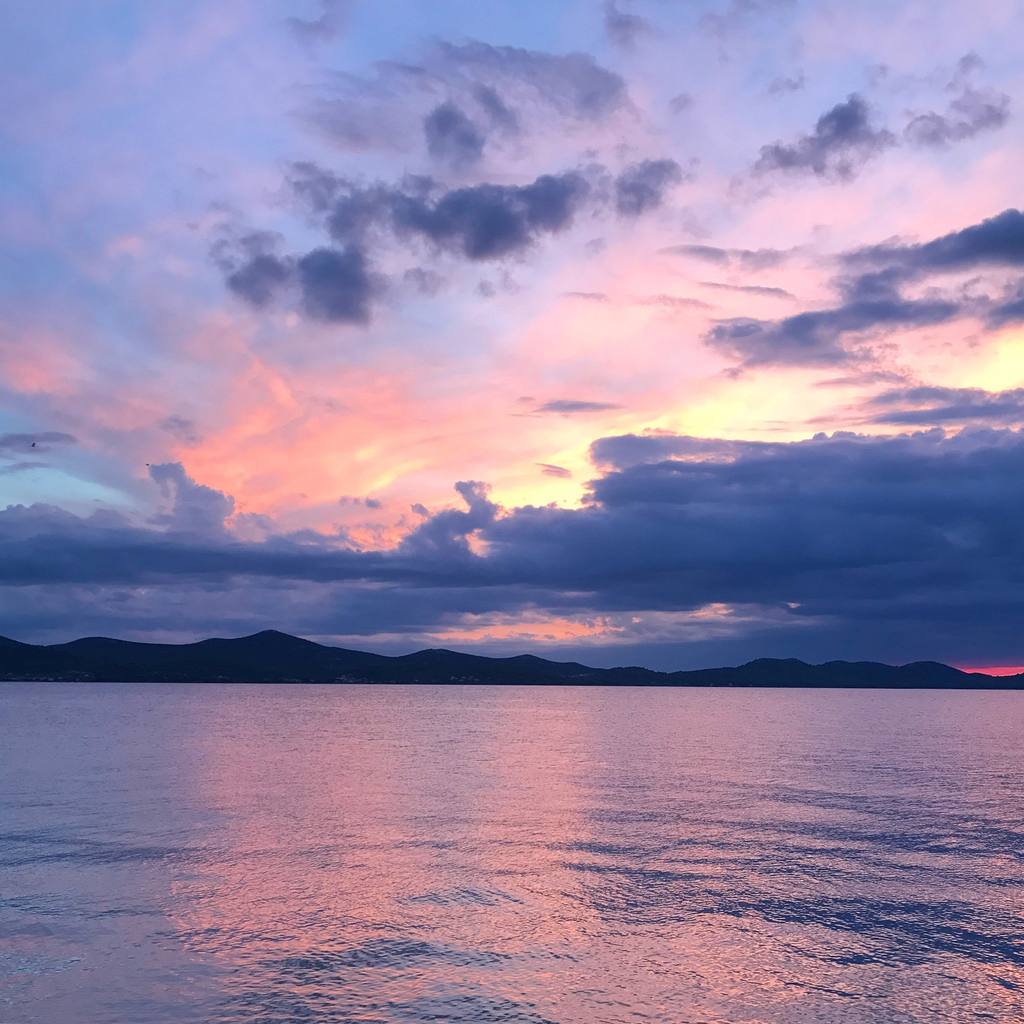
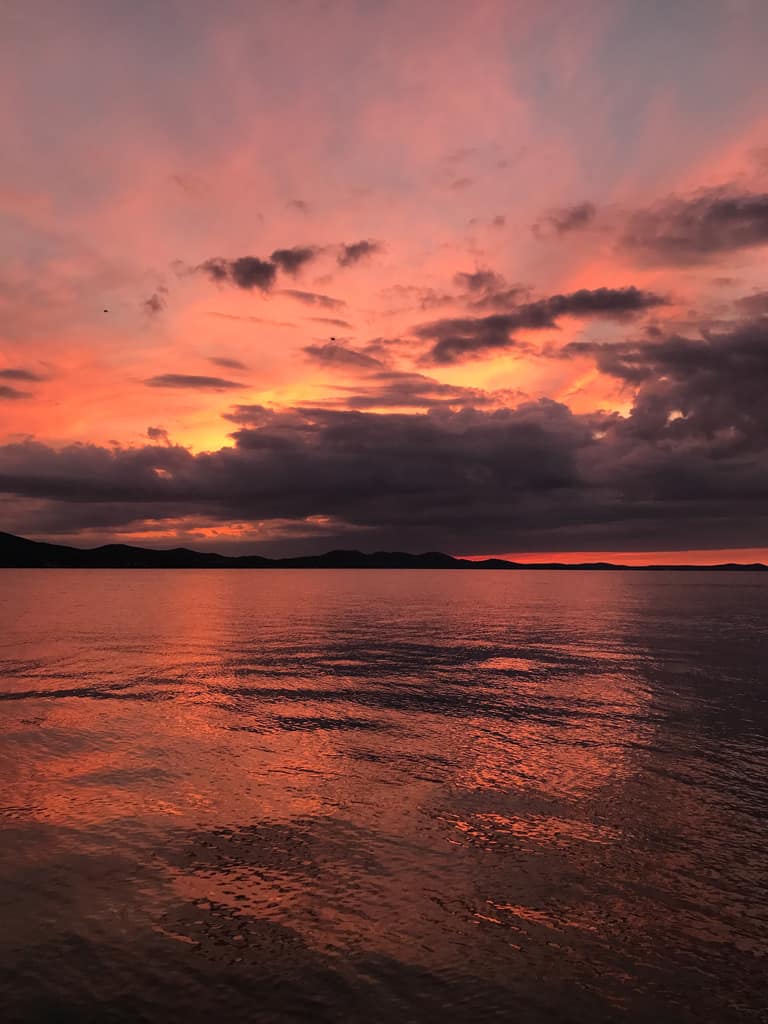
Every evening I walked down, sat on the steps with my Nook, and read until the sun went. The music changes with the swell, so a passing boat rewrites it. People sprawl on the stone. Nobody talks much.
“Where light never did shine, nature still connected to sound.”
Play it yourself
Drag the swell. Bigger waves push more air through the pipes, the same way the Adriatic does. Sound is off until you press play — nothing on this page makes a noise on its own.
 From the blog · ZadarThe Stunning Symphony of Sounds from The Sea OrganThirty-five pipes in the pavement, played entirely by the Adriatic.Read the story
  From the blog · Plan it10 Things to Do When You’re Visiting Zadar, CroatiaThe short list, from the Roman Forum to the city market to the olives.Read the story
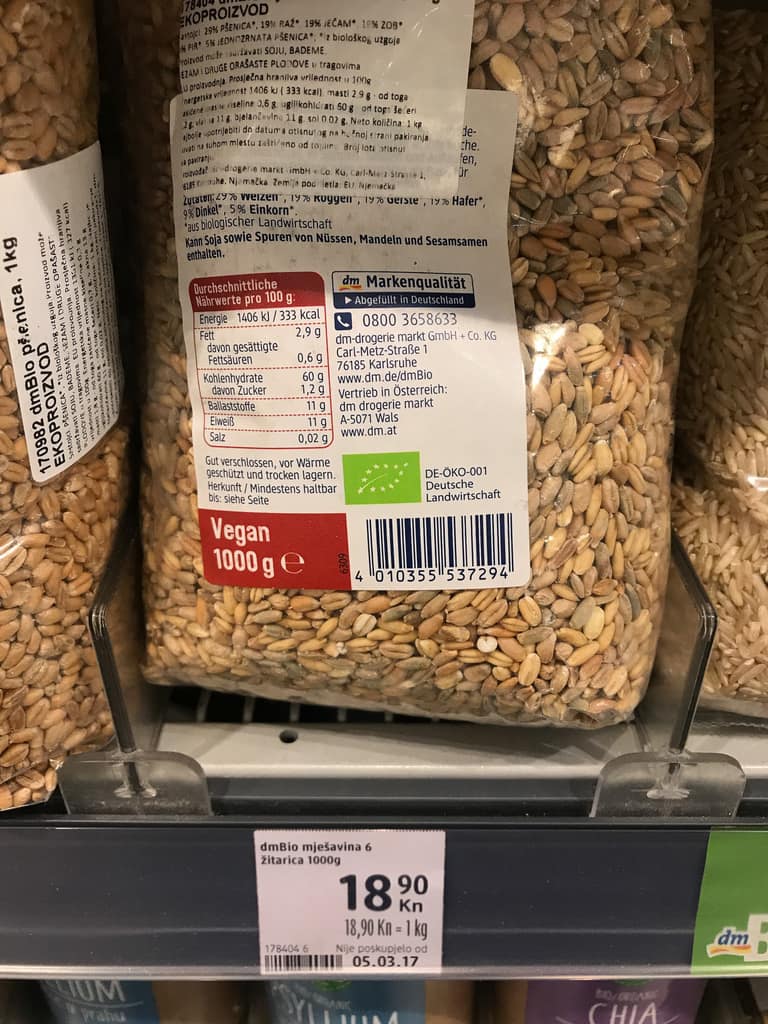
 The first thing I bought in Croatia was a bag of grains.
Not birdseed. The supermarket did not have any. A mix with a bit of everything in it, for a healthful variety.
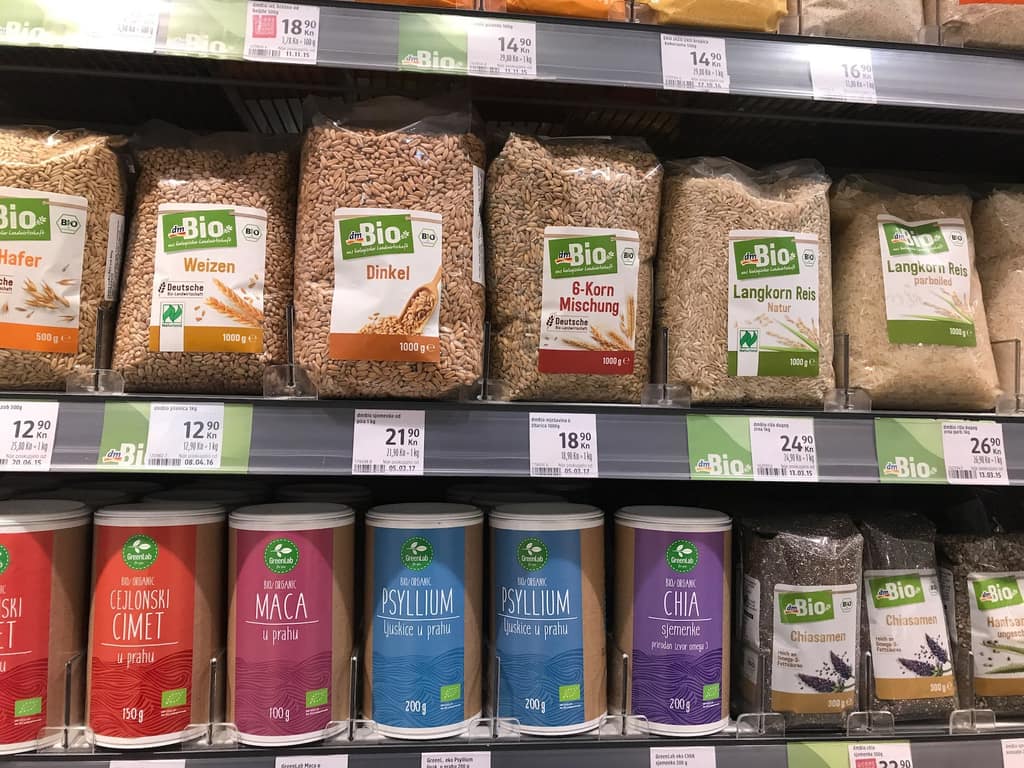
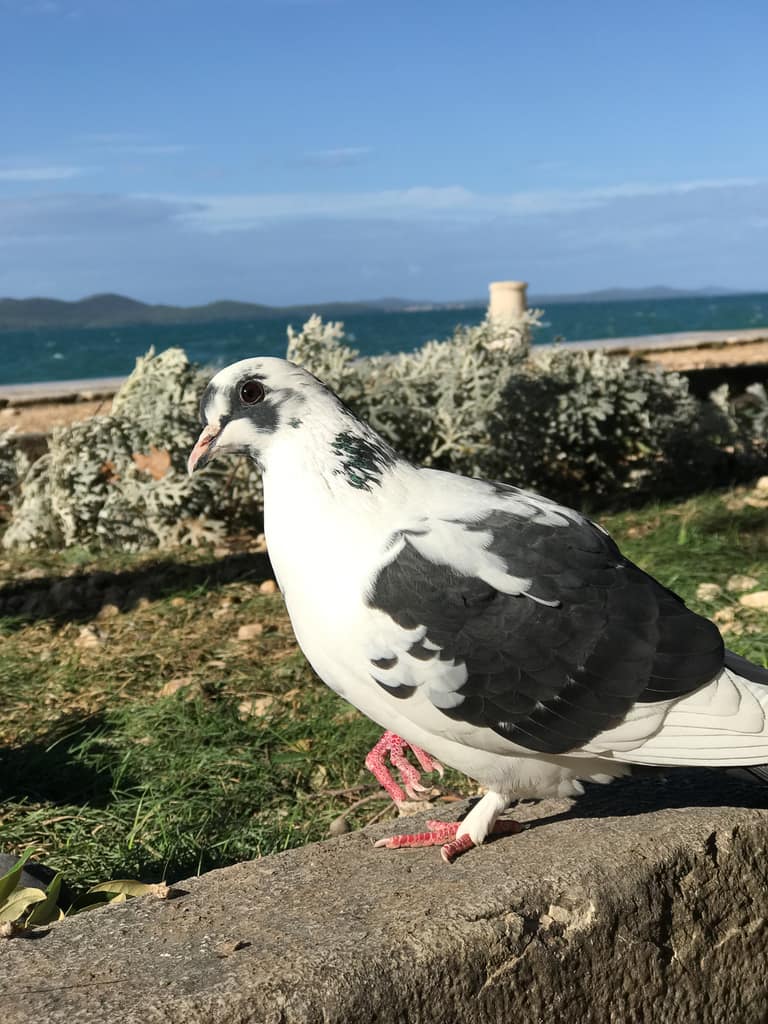
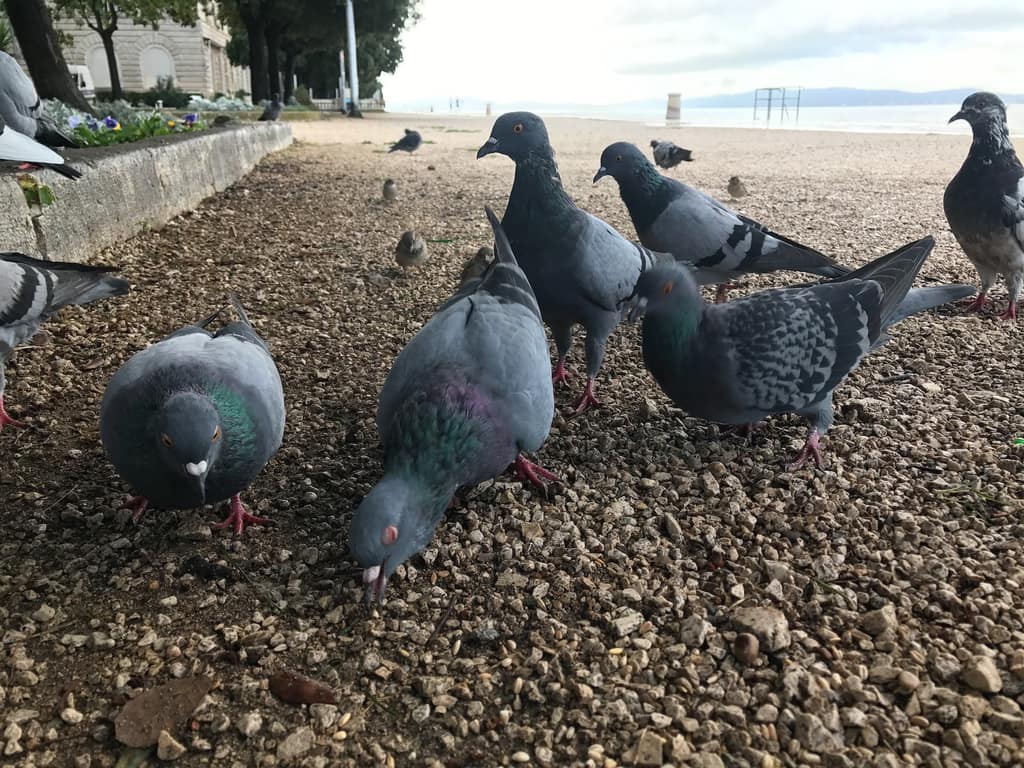
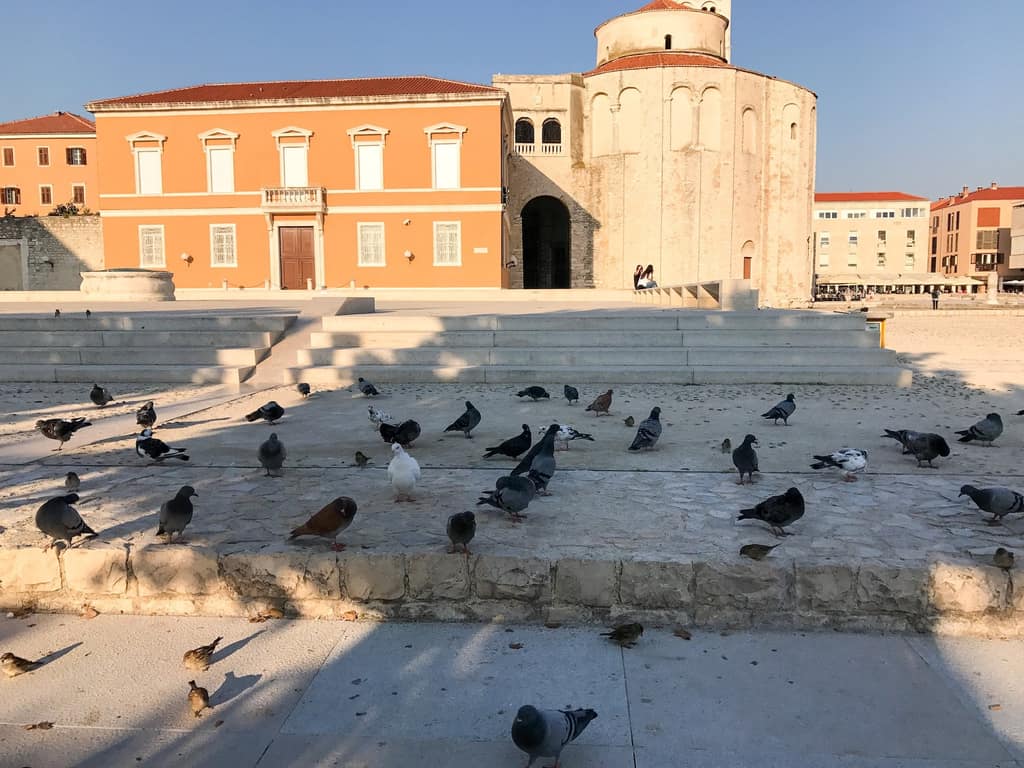
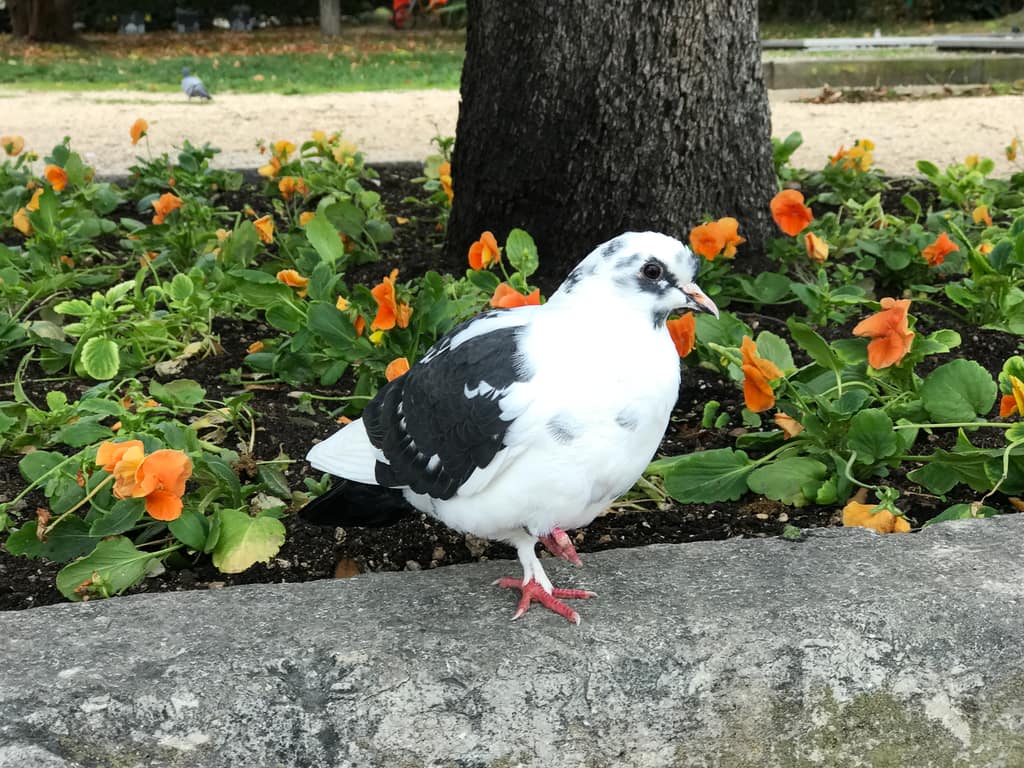
Feeding wild birds has made me happy since I was a child, and I do not travel without something for them — rice, bread, grains, seed. By day two I had found a flock on the waterfront while I was sitting on a bench trying to blog.
They came closer than most birds would, and stopped well short of my legs. That is the deal with pigeons: braver than anything else on the promenade, and still not stupid.
Within a week I had learned pigeon time — when they turn up, when they do not, and that cold, windy or wet means they arrive an hour or two late.
I named her for the church bells.
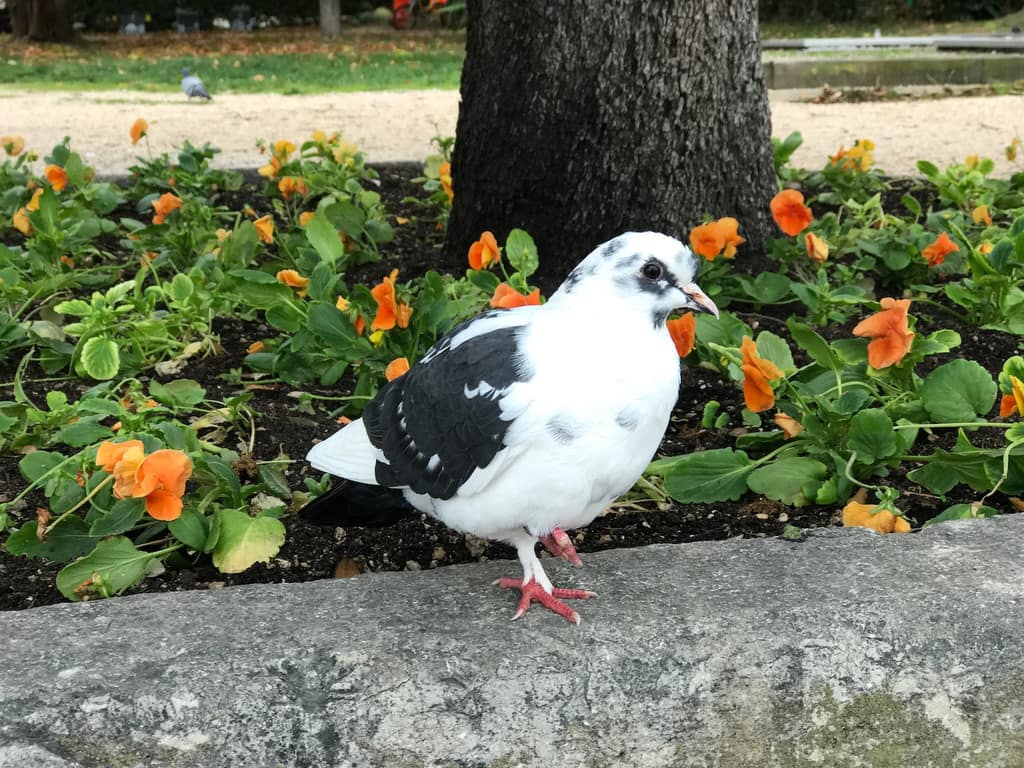
She was quiet, she was gentle, and she could not walk properly. I looked for her every day for twenty-eight days.
Belle
For most of the month she did not have a name. I just called her “my pigeon.” Near the end I settled on Belle, because I would see her each morning right around the time the church bells rang.
She had an injured leg, which made walking hard and made competing for food harder. So I started distracting the pushier birds and slipping her a separate pile of her own.
“Belle quickly caught onto our secret strategy.”
Every mark below is a day of the trip. The coral ones are days I could have seen her — I met her on day three, and over the 28 days I saw her somewhere in the city at least 25 times.
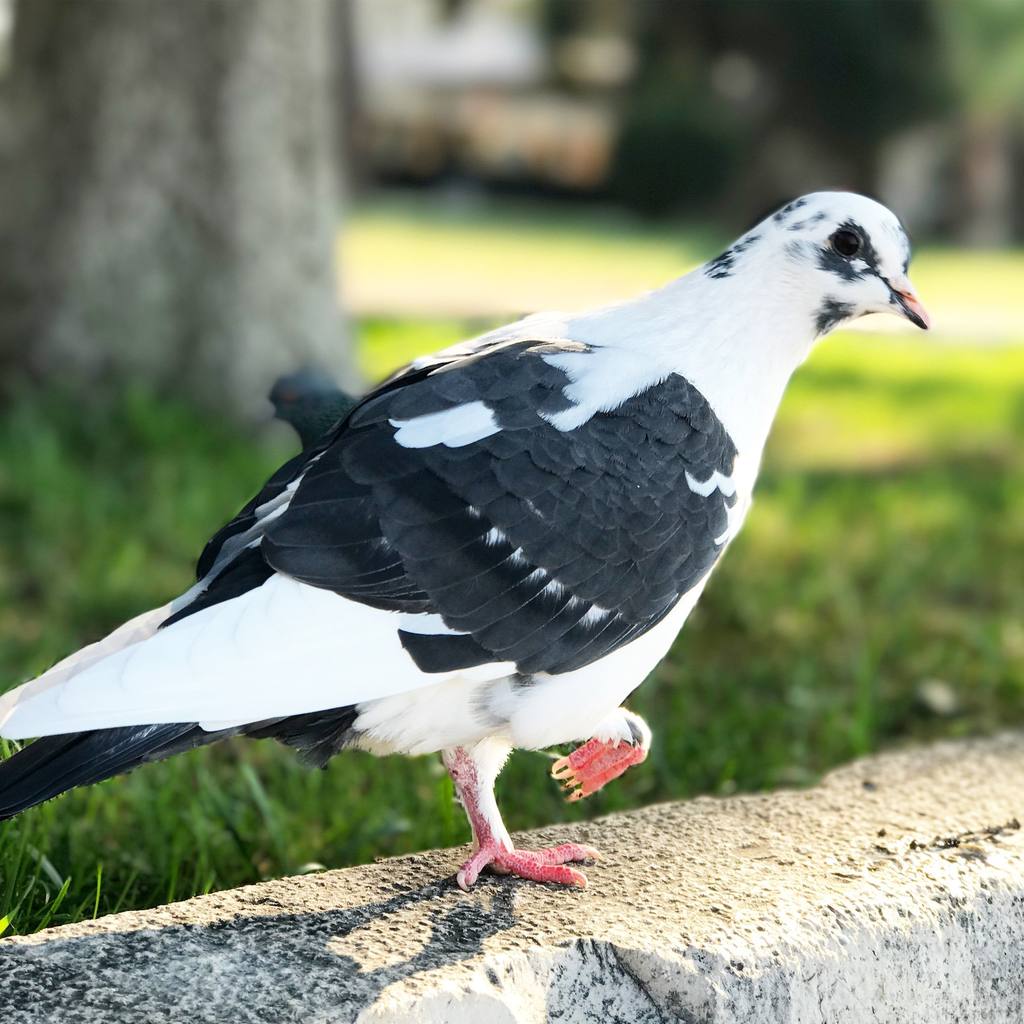
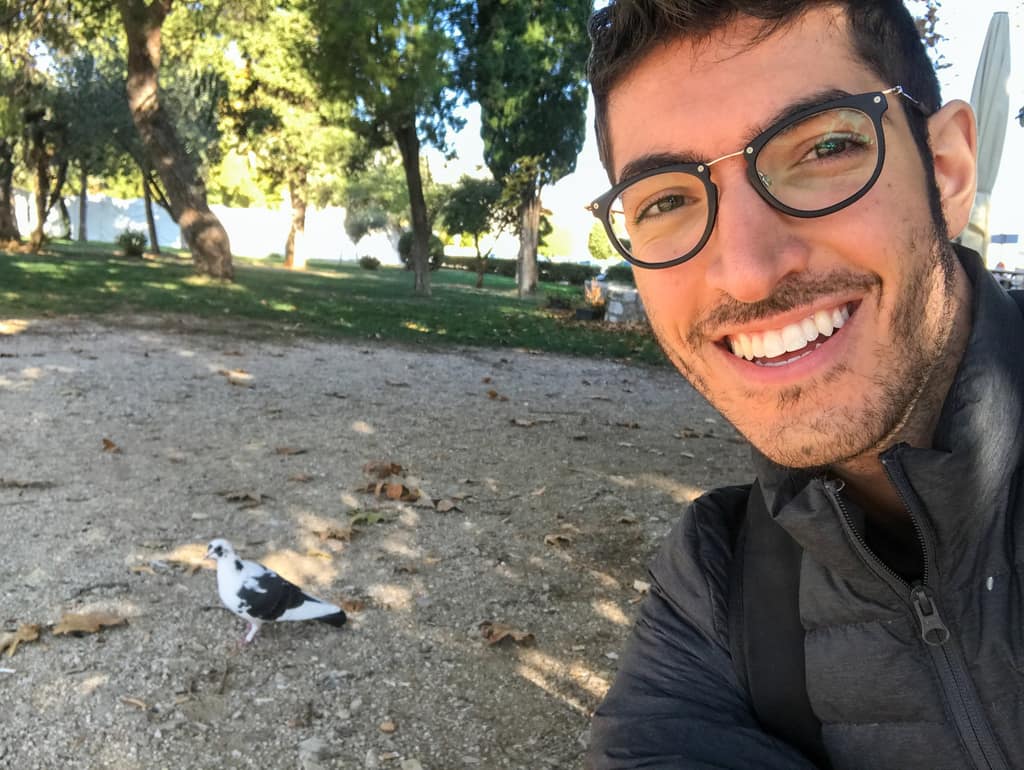
“I dreamt that I was on an airplane and when I looked out the window, Belle was outside of it flying.”
She is not a memorial. As far as I know she is still out there.
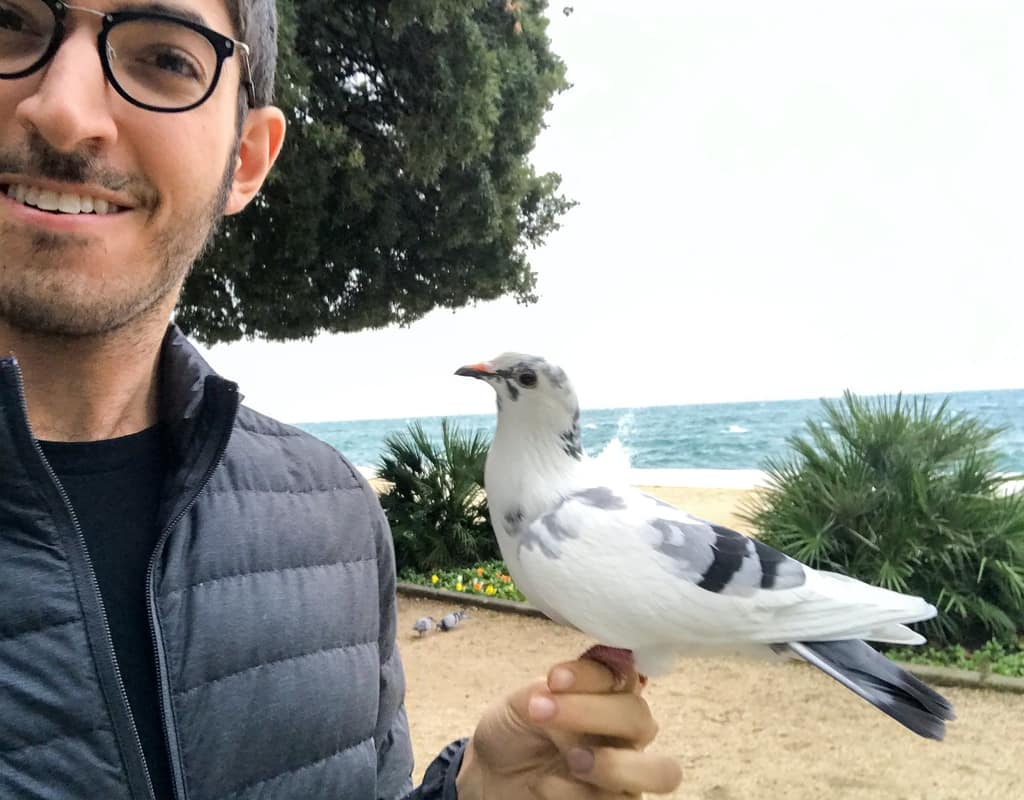
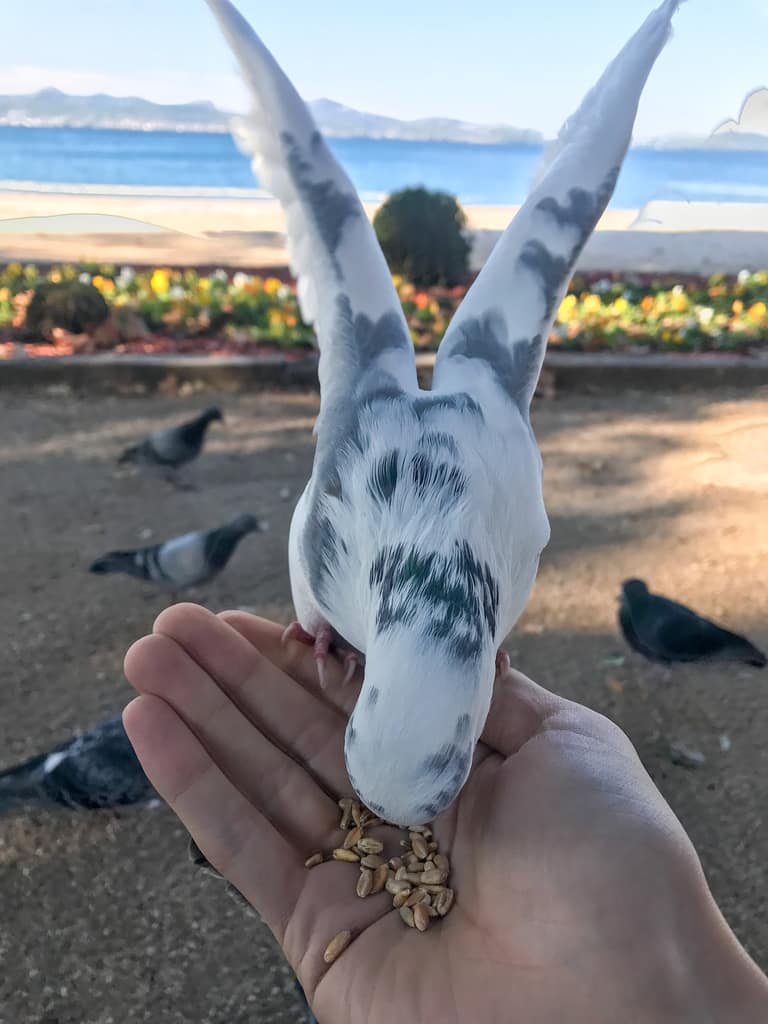
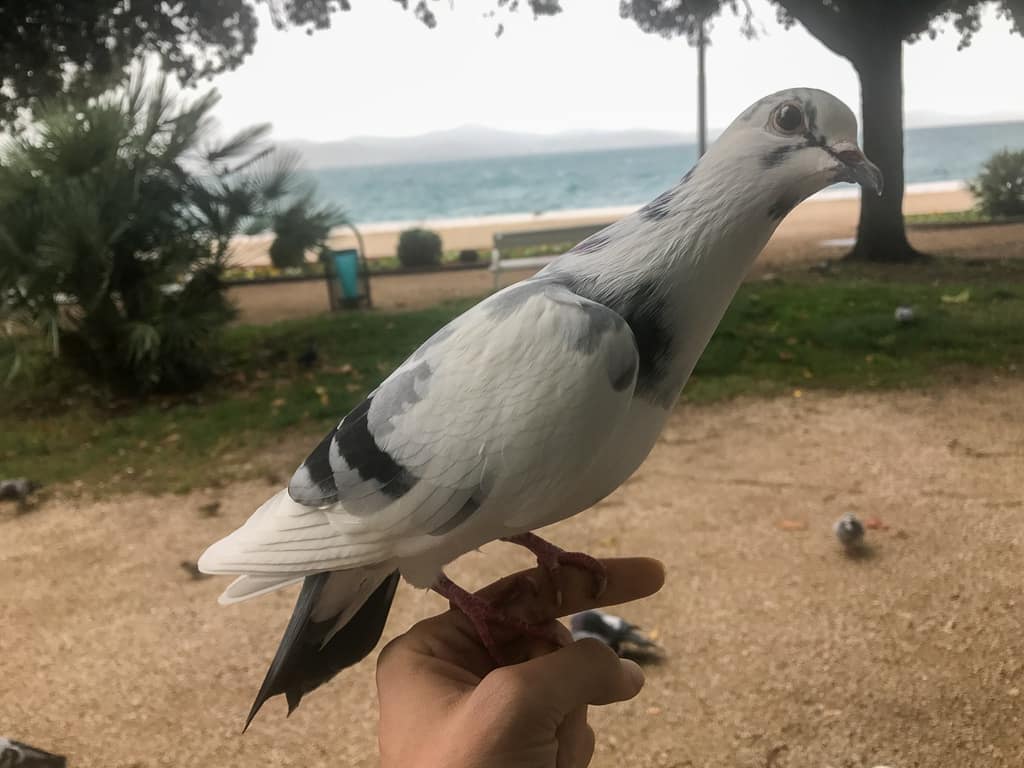
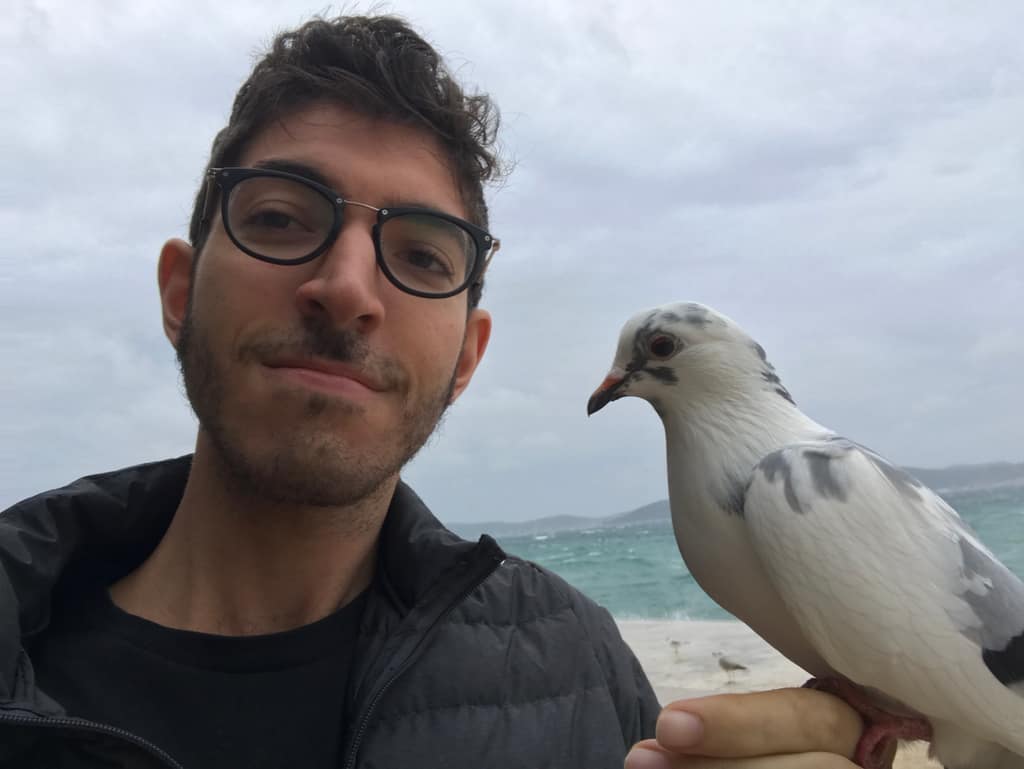
Belle I chose. Jesse chose me.
Bold, dominant, first in line, and in possession of the most mesmerising pair of eyes on the Dalmatian coast.
Jesse was a bold and assertive pigeon who held himself with poise. I think he led that flock. He was always the first one down, and he watched everything.
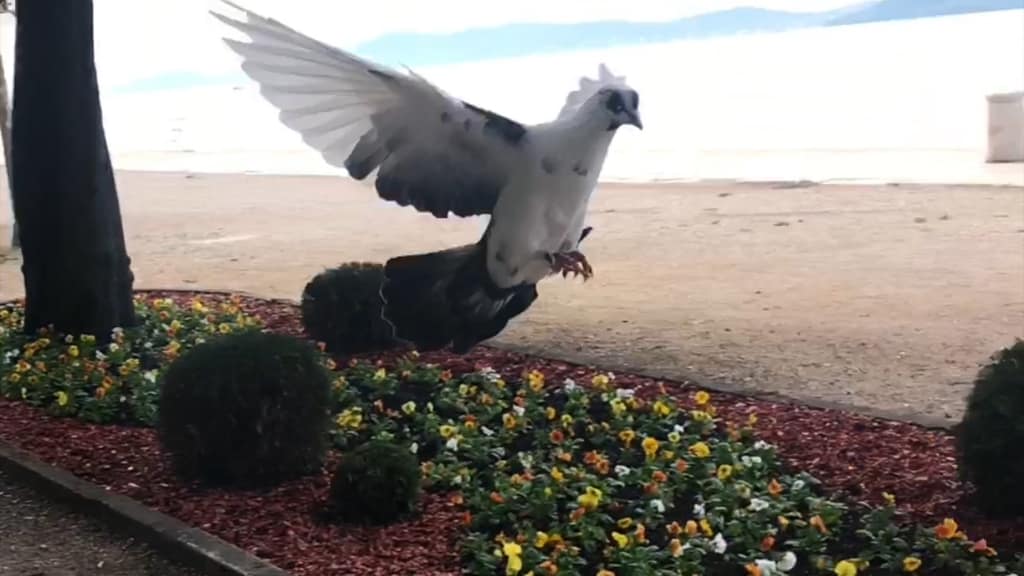
It took fourteen days from meeting him before he would let me hold him — and when it happened it was entirely his idea. I had a small panic attack. Then it became normal, and then it became a problem, because I had to speed-walk through the city centre: if Jesse spotted me we turned heads, him making his grand landing.
“Their bodies are hefty and airy all at the same time.”
He worked it out on his own. Land on this stranger’s hand, get first-class pigeon treatment and early access to lunch.
Hold out your hand
This is how it went, roughly fourteen days in.
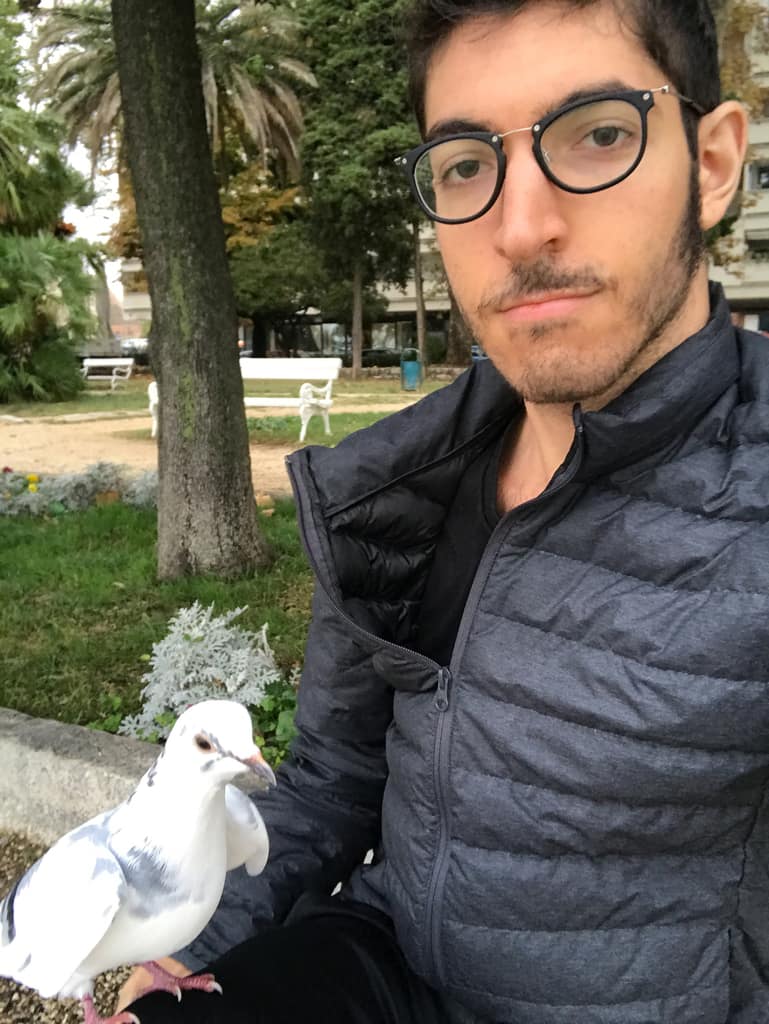
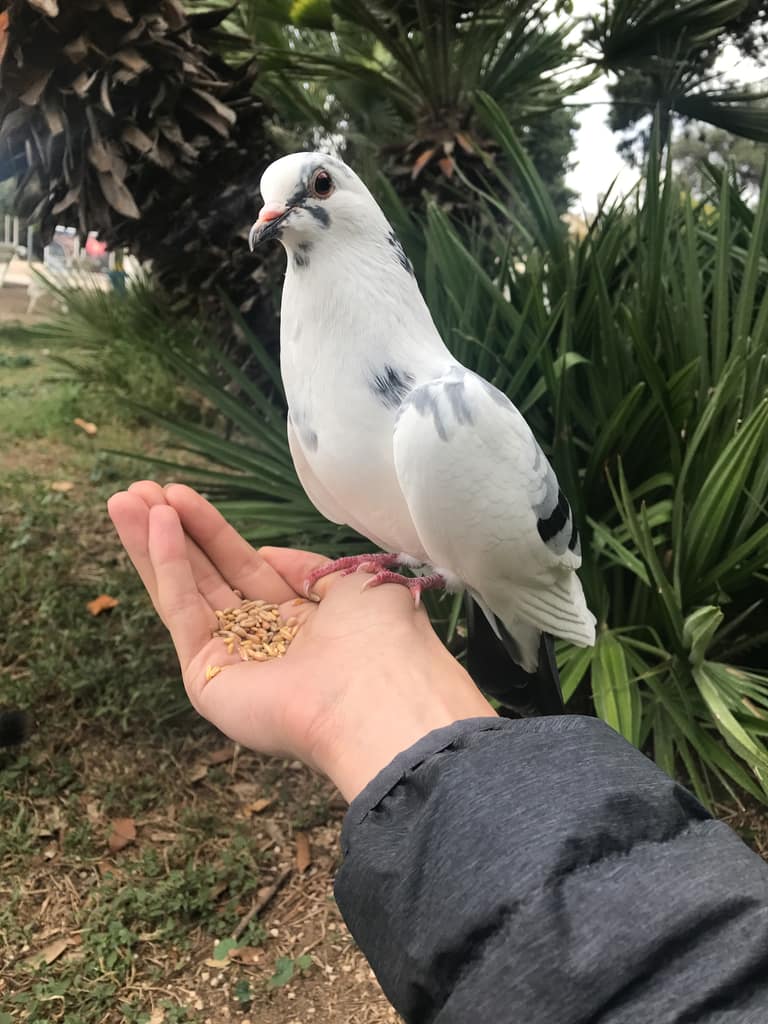
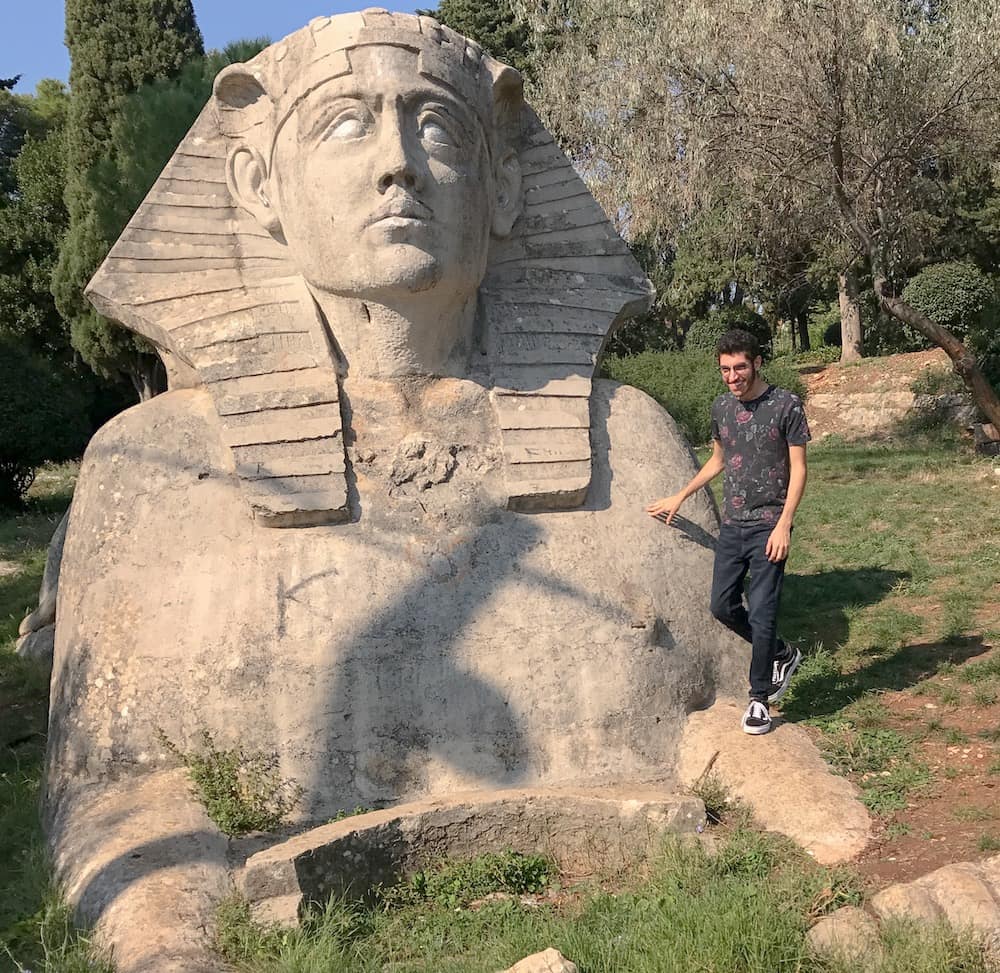
A friend drove me to see a sphinx. In Croatia.
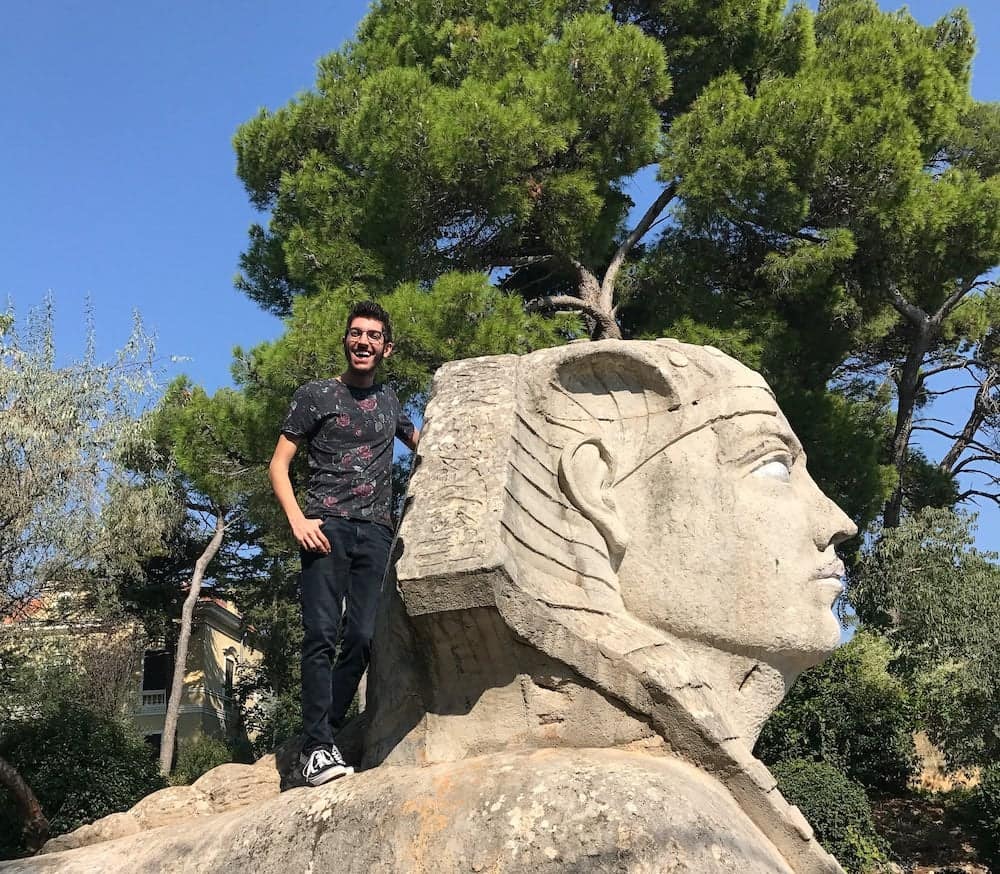
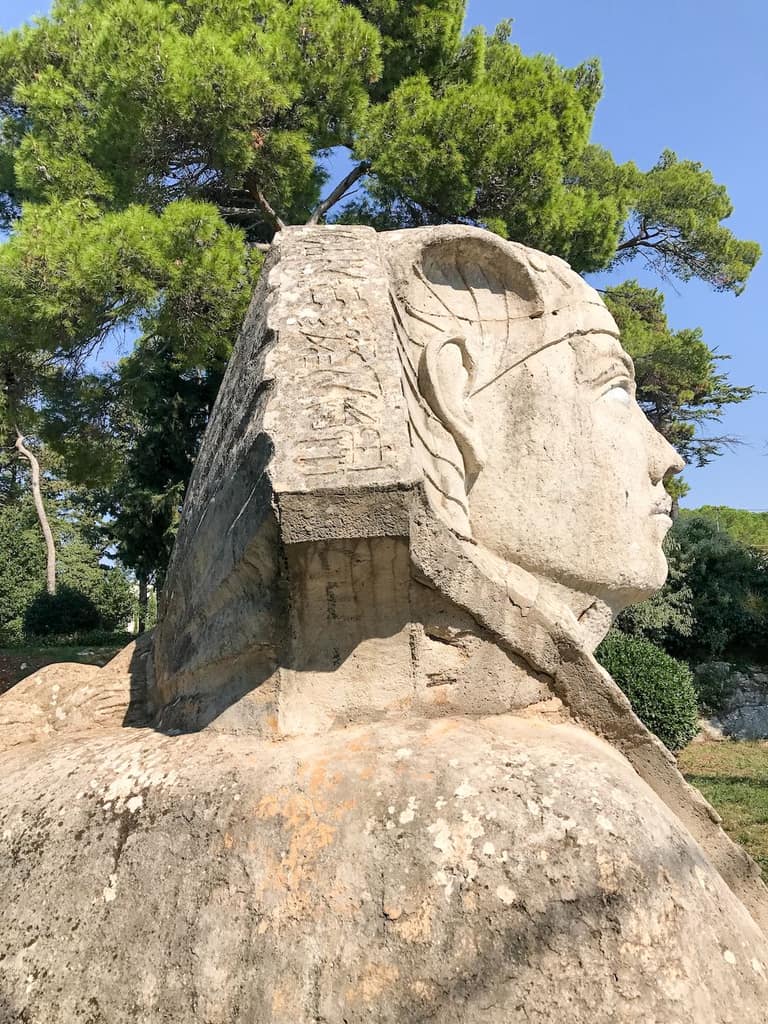
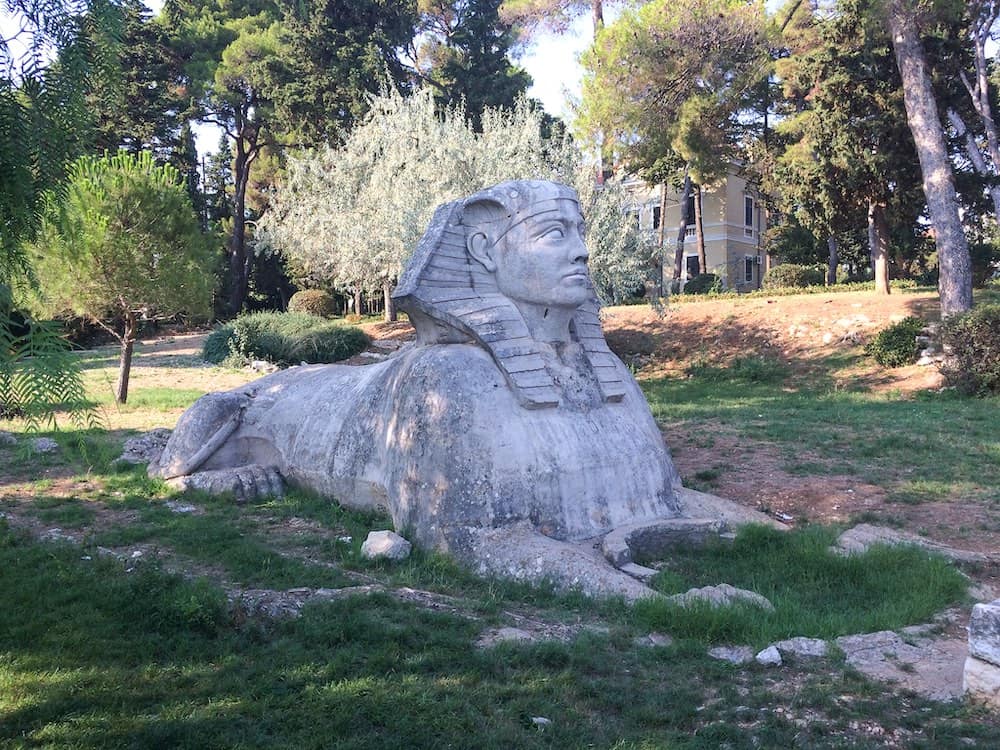
Europe’s largest sphinx sits in a seaside garden in Zadar, and almost nobody outside the city knows about it.
“Rocky, do you ever wonder why there is a huge sphinx in Zadar?” She drove round a corner and an Egyptian head looked at me out of the trees.
The story goes that Giovanni Smirich, a local artist and historian, built it around 1918 in memory of his wife Attilia Spineda de Cataneis, whom he had met in Venice and brought to Zadar. Their house, Villa Attilia, stands right behind it. The legend that grew up afterwards says the sphinx grants love wishes.
Worth knowing: the official Zadar Sphinx project dates it only to “around 1918” and notes that no precise date is documented, and the love story is not confirmed by any record. It was restored in 2022 under an EU project, and the park is free and open all year.
It is about five metres long and three metres high, with a nemes headdress, hieroglyphs, and human hands instead of lion’s paws.
Then I looked up and it was a cat.
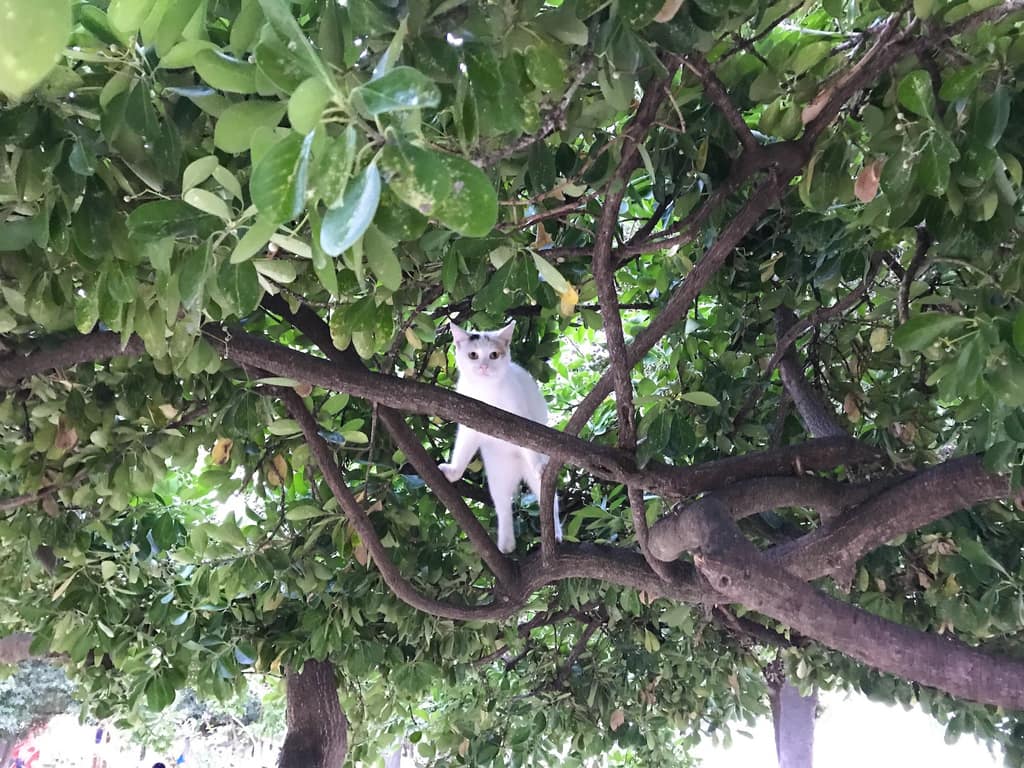
I thought the white thing in the treetop was Belle or Jesse. It was not.
He came down the trunk like he had done it a thousand times, because he had. After that he was always up there in the evening, perched like a bird, and I started carrying cat treats as well as birdseed.
He had a friend — brother, partner, I never worked it out — a tabby who could not walk in a straight line and seemed to have trouble seeing. A woman from a nearby building came out with cans to feed them both.
And then the gulls arrived, chased the cats off the bowl, and ate the cat food. In Zadar the birds do the bullying. Some of them even sound like cats.


Four things worth getting on a bus for.
Croatian truffles come out of the Motovun forests in Istria, they are said to have a stronger aroma than Italy’s, and one truffle-heavy meal costs about half what the same plate costs across the water.
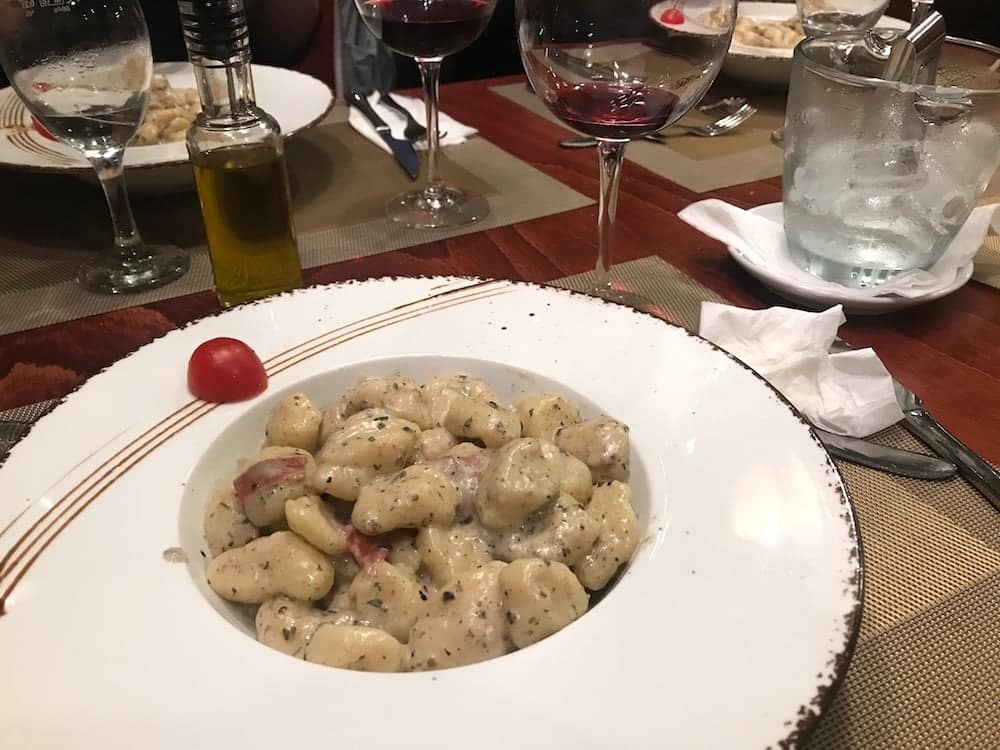
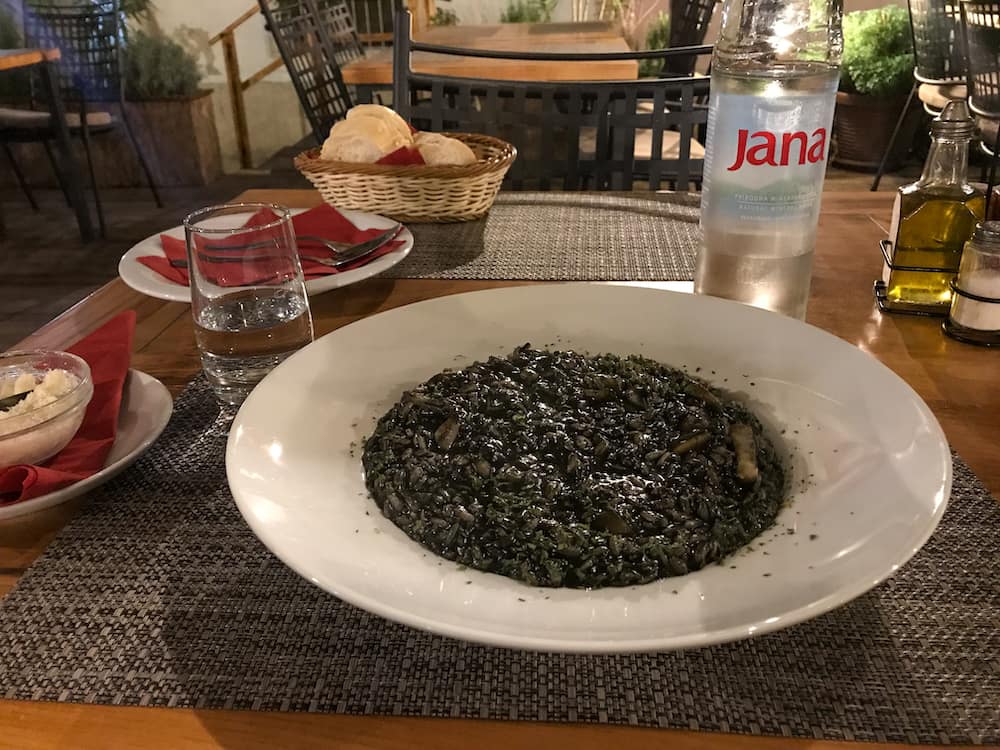
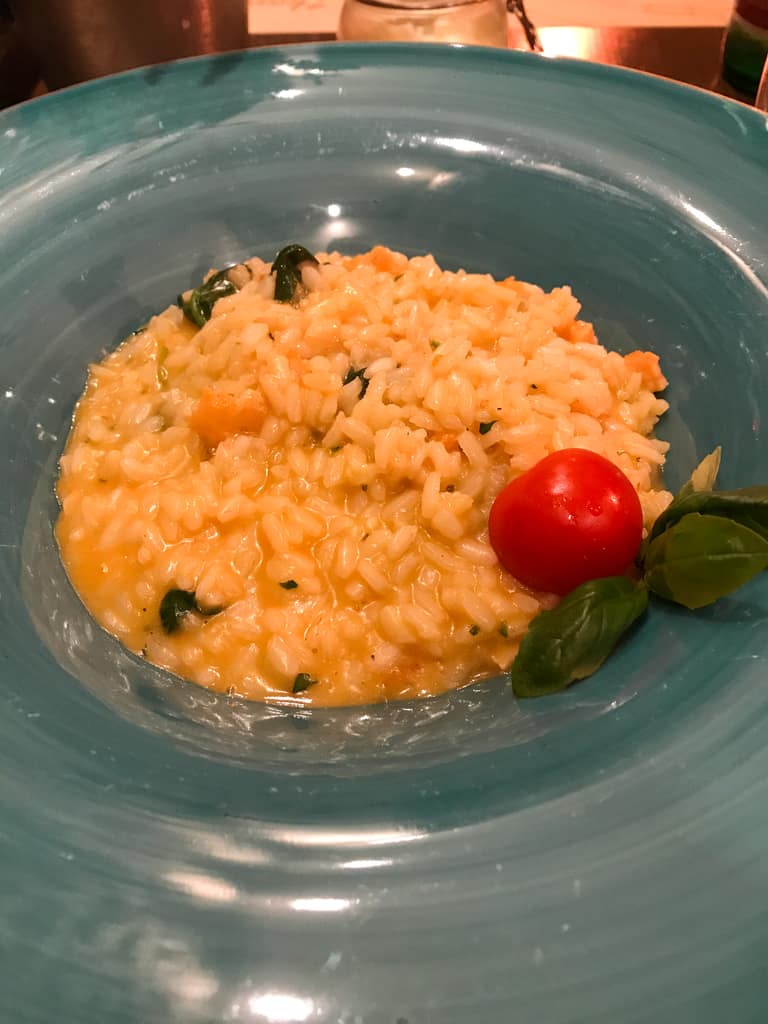
Šibenik is made of stone and it has outlasted everything.
Ninety minutes south by bus, and the only day of the month I did not travel alone.
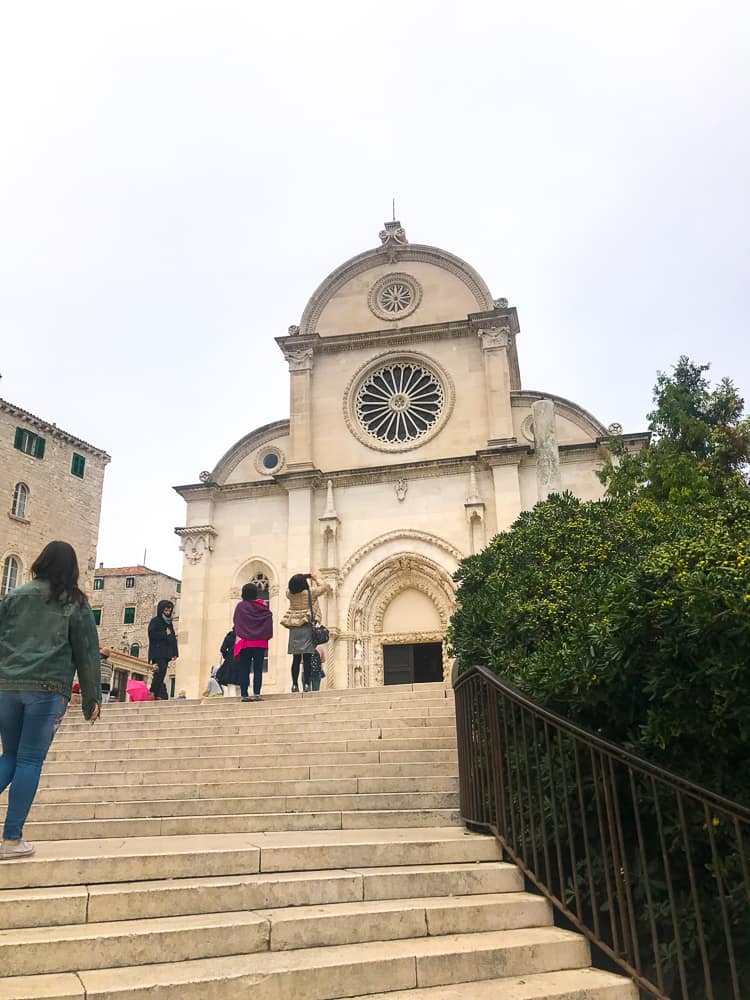
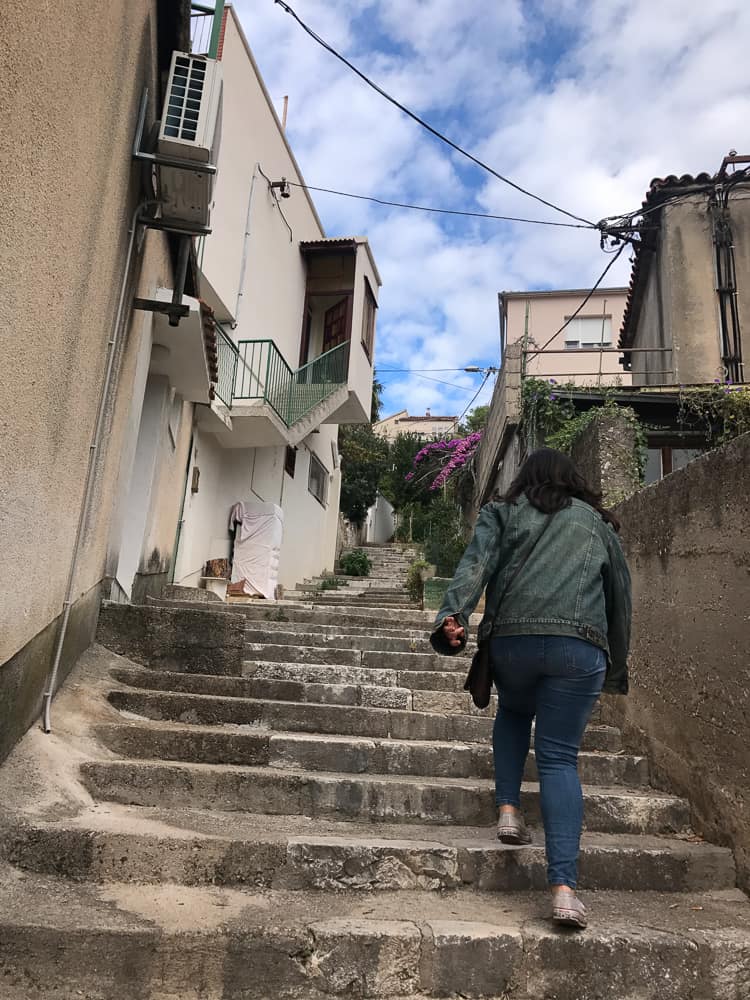
Unlike Split or Dubrovnik, Šibenik was actually founded by Croats. It is stone buildings, stone stairways, stone alleys, rock cliffs. We went with no plan and walked until we ran out of city.
“Šibenik is a city of resilience; it has withstood the toll of war and extreme weather.”
The Cathedral of St James is the only cathedral in Europe built entirely from stone — no brick, no timber — put up across the 15th and 16th centuries, with a frieze of carved heads round the apse. The City Hall opposite it went up between 1533 and 1546. Game of Thrones filmed here.

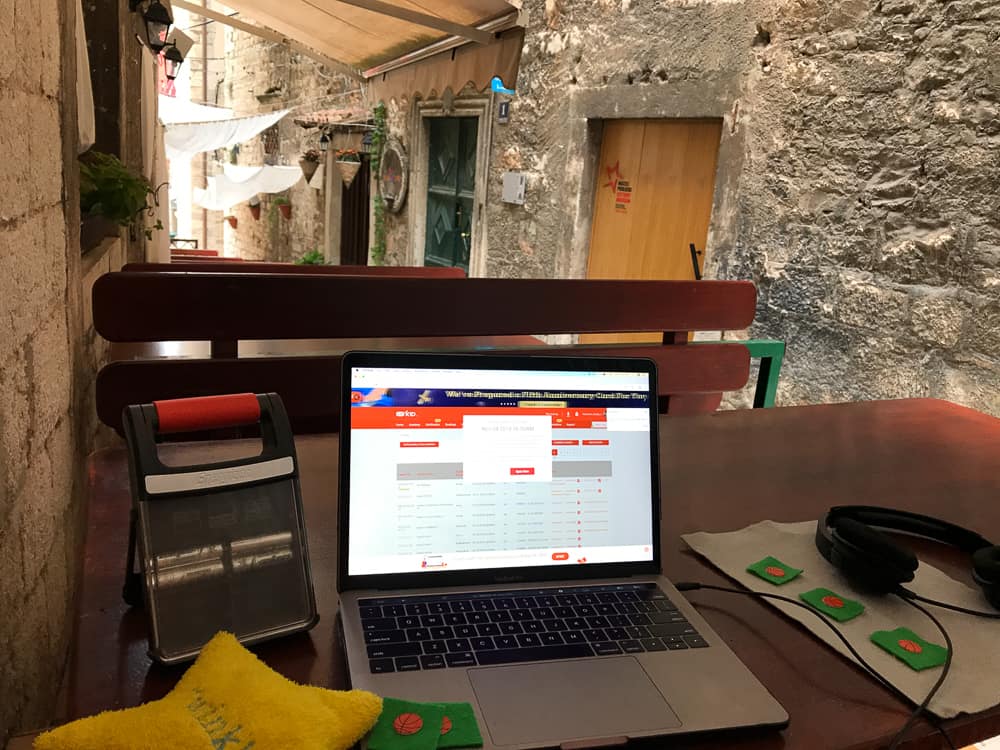
The classroom. A closed restaurant terrace in an alleyway.
Then I got booked for a class, three hours’ notice, in a city I did not know.
I was on the bus when the VIPKID notification came through. Cancelling costs teachers money, and I had my equipment with me, so instead of cancelling I spent the afternoon scouting Šibenik for somewhere I could teach in public without making a scene — which is hard, because teaching on that platform means being loud, slow and extremely animated with your hands.
I found an outdoor table beside a closed restaurant, set up, and taught from an alleyway. My student spotted the Croatian flag behind me almost immediately. I got a five-apple rating.
The best day I have ever had was spent up a tree.
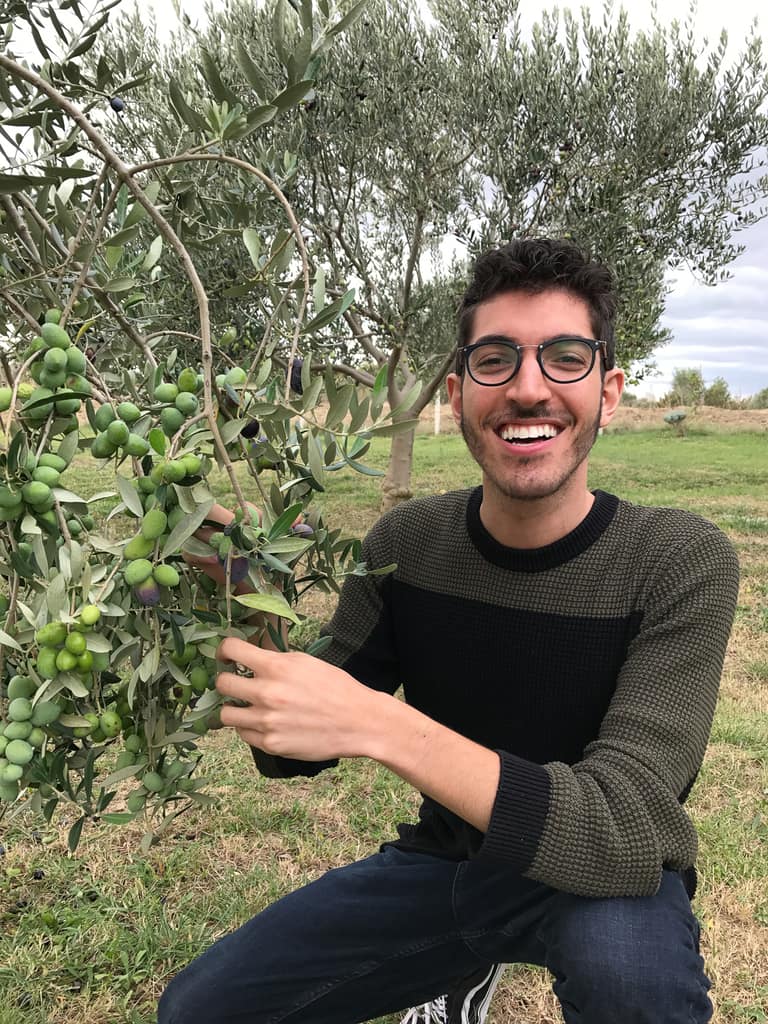
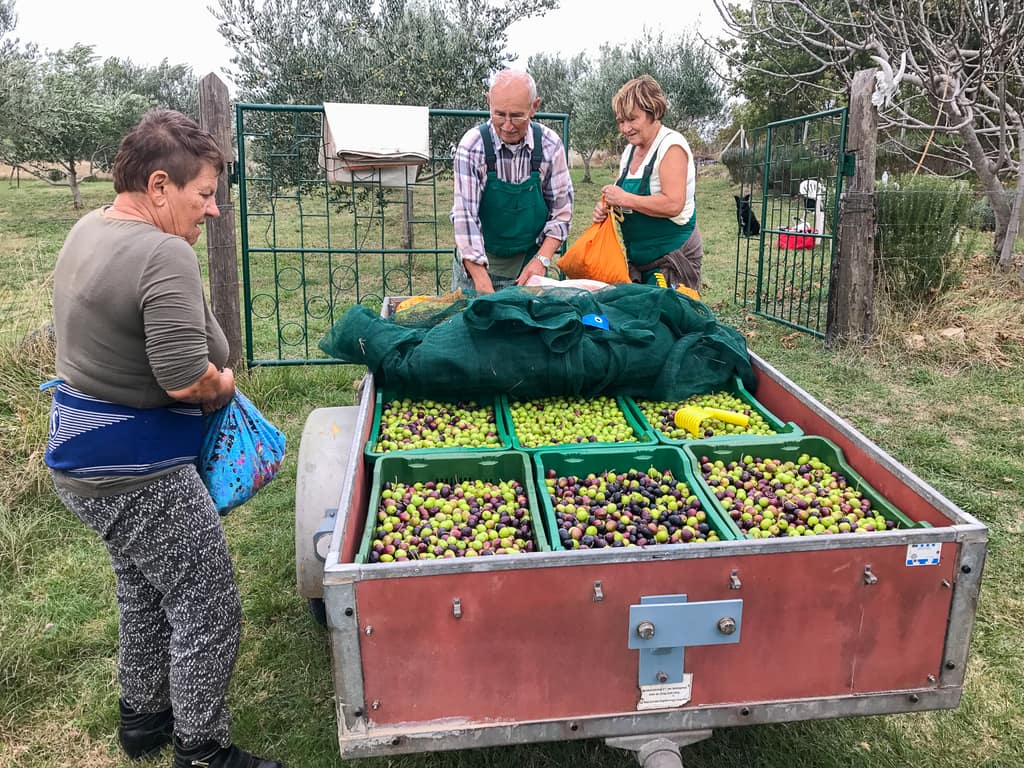
A local family asked if I wanted to help bring in their olives. I had never seen an olive tree in my life.
“the time I helped a Croatian family harvest over 450 pounds of olives for the production of extra virgin olive oil has to have been one of the most authentic and memorable life experiences I have ever had.”
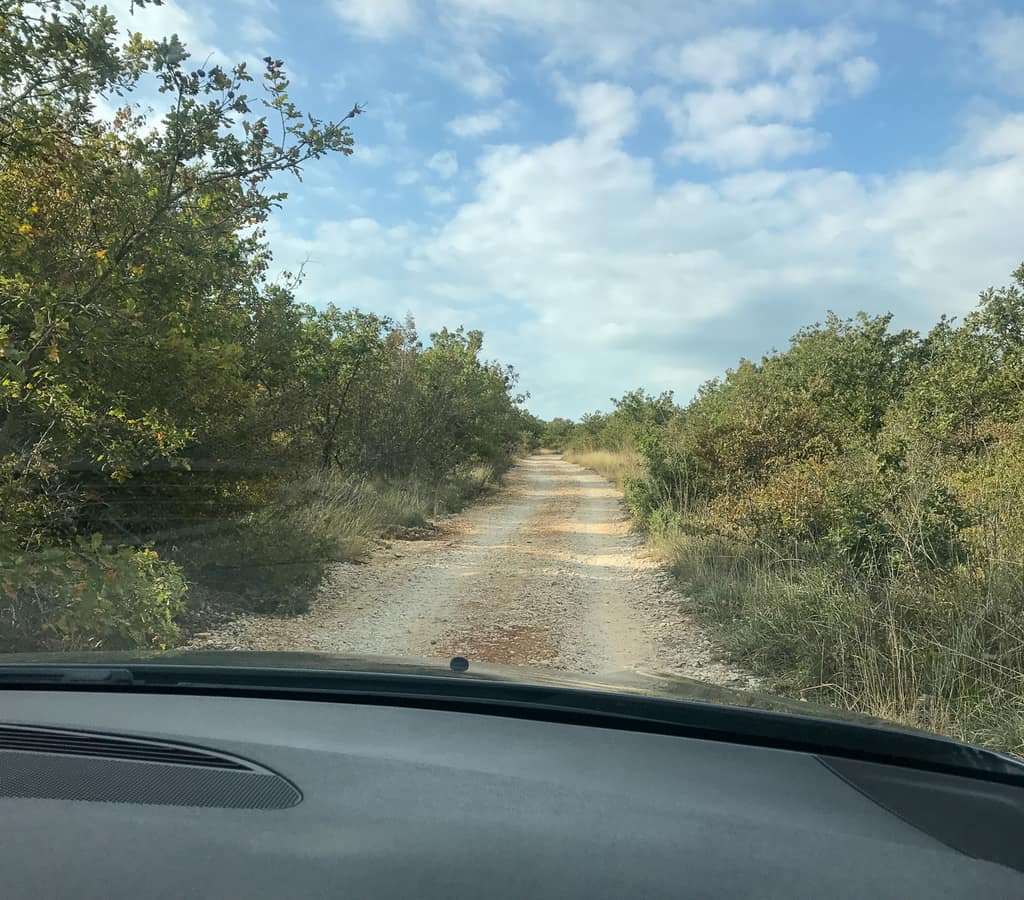
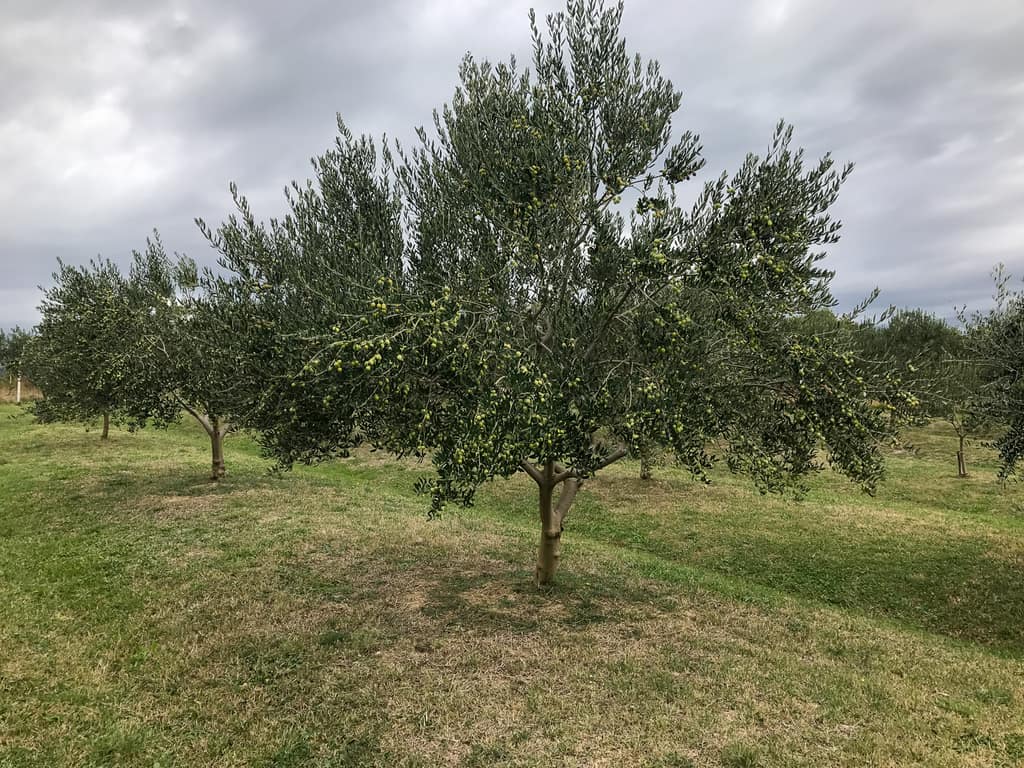
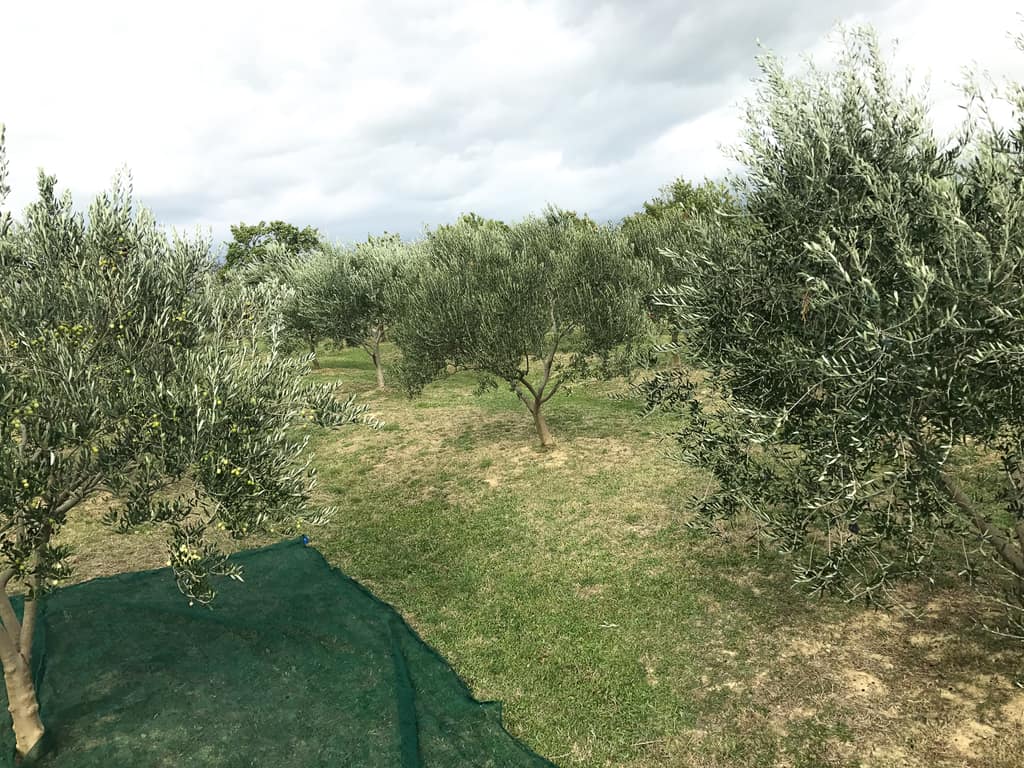
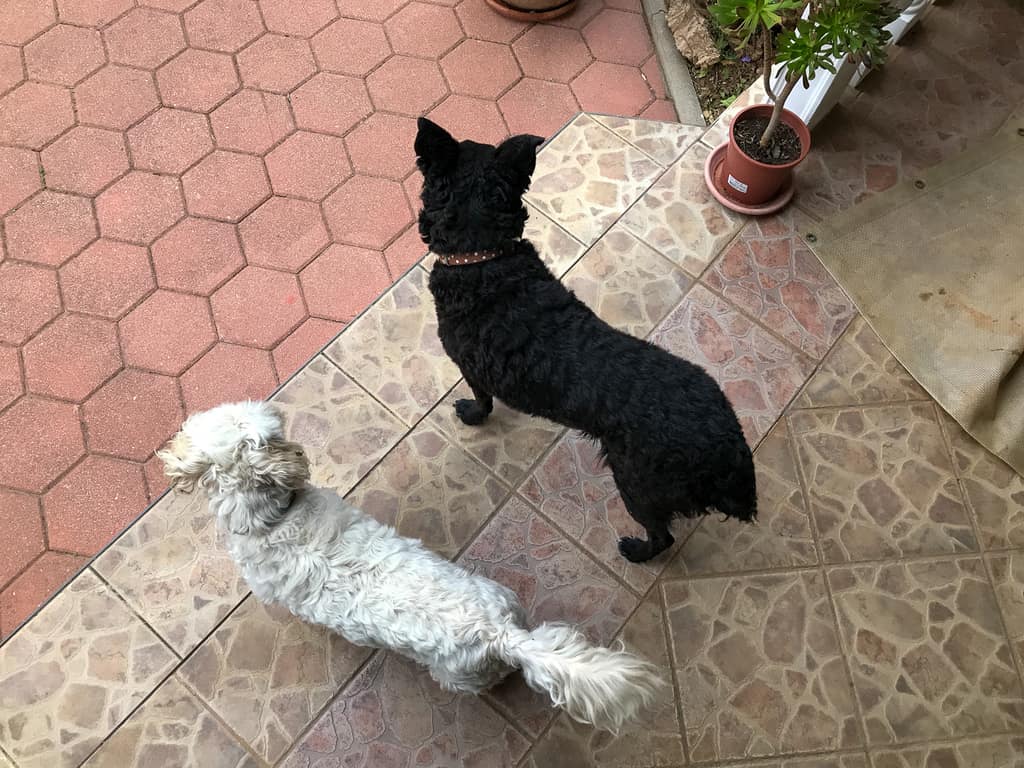
Eighty trees on their land, out past where the phone signal stops. No data, no service, just me and the olive trees and a family I had known for about three weeks, plus their two dogs.
We used plastic hand rakes rather than picking by hand, because rain was forecast for the evening and everything had to come in that day. It did. Four hundred and fifty pounds of it.
Lunch was homemade and eaten outdoors in the middle of the grove. When the last tree was done, the whole family went to the beach to celebrate.


Three days later, two bottles turned up.
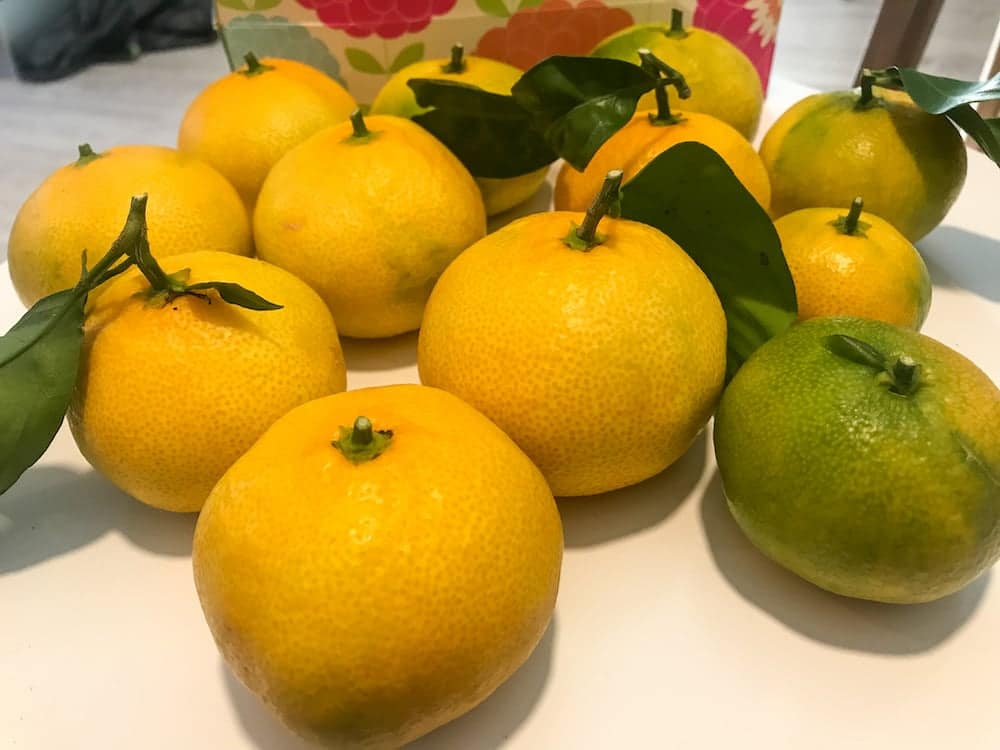
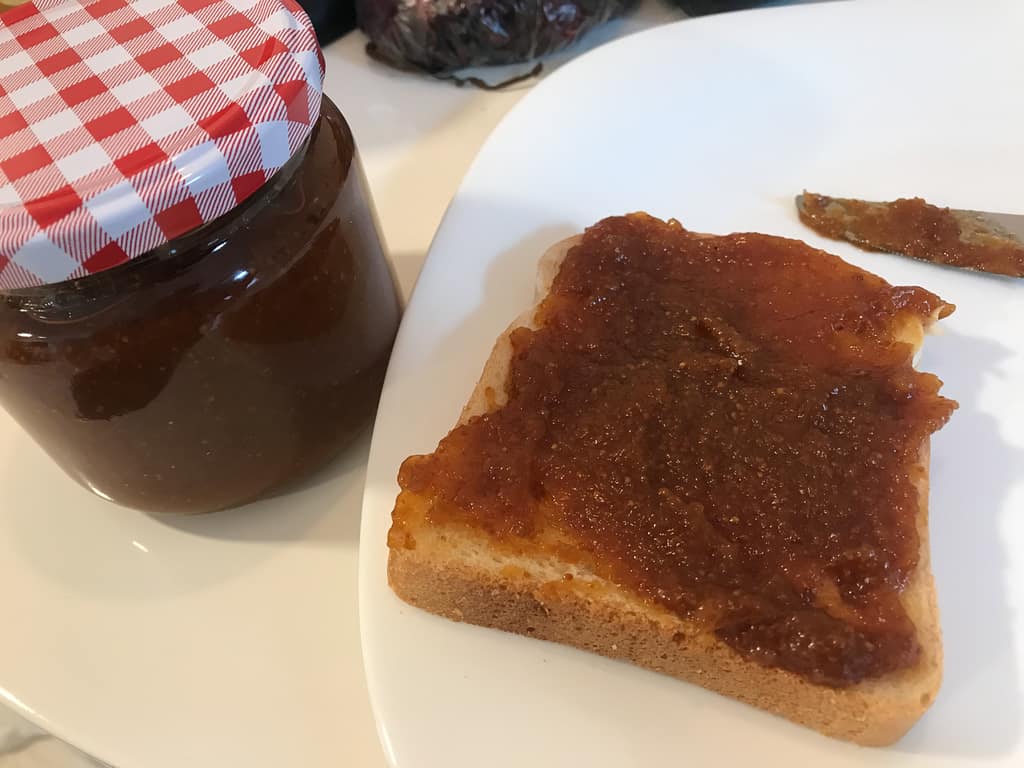
Oil pressed from the same olives I had helped collect, and a bag of everything else their land grows: oranges, lemons, limes, pomegranates the size of my fist, dried figs, a fig bar and fig jam. Figs are one of my favourite foods in the world, so I was in fig heaven.
“The flavor of this olive oil was unlike any olive oil I have EVER tasted. Unreal… SO real.”
Standing in those trees was the closest I have felt to my own family while being 4,000 miles from them. My grandparents both grew up on small farms in southern Italy, and all I wanted was to get home and tell them what I had just done.
“It was in those moments that I felt connected to my heritage.”


Shake the tree. Fill the crate. Four hundred and fifty pounds.
This is what the day actually felt like: rake, drop, tip, repeat, with rain coming. Get the crate to 450 lb and the press does the rest.
80 trees. One harvest a year. Rain forecast for the evening.
Every hundred-pound sack makes 7.5 to 10.5 litres of oil. Ours came back as 2 bottles, 3 days later.
How an olive becomes oil.
Everything below I was taught standing in the grove, mostly across a language barrier, mostly by pointing.
An olive is a fruit. A tree takes five to eight years to bear, then gives you three or four hundred-pound sacks a year, alternating heavy and light crops. Each sack makes seven and a half to ten and a half litres of oil. There is exactly one harvest and one pressing per tree per year, which is why getting the timing right matters so much.
And you cannot eat them off the tree. I tried. I spat it onto the grass in front of everybody. Curing is what takes the bitterness out, and brine takes months.
The same olive, three times a year apart
Green
Bitter and grassy in flavor. Highest antioxidants and shelf-life. Difficult to extract olive oil from green olives.
Veraison
Oil with some ripe fruitiness. Some bitterness and pungency in flavor. Acceptable, standard ripeness for extracting olive oil.
Black
Sweet oil. Highest oil availability for extraction. Lowest antioxidant content. Overripe olives can also create problems for extracting olive oil.
Tree to bottle, in seven steps
Pick on time
Olives ripen once a year, and only once. His family picked at “early harvest” — mid-to-late October, at veraison, when the colour is turning from green to red or black. Too ripe gives you more oil of lesser quality.
Rake, don’t shake
Plastic hand rakes and a pouch around the waist. Mechanical harvesting shakes the whole tree into a net and is mostly a California thing; the best growers still pick by hand, because it lets you control ripeness and it is gentler on the tree.
Wash and sort
Water only, no chemicals. Twigs and leaves out, then spread on a tarp to dry in the sun. Sort by the oil you want — or blend the stages deliberately.
Crush
Stone wheel or hammer mill, ground to a paste. Cold-pressed just means no heat and no chemicals. The family did not own a press, so the olives went to a dedicated press house for a fee.
Malaxation
The paste is stirred, slowly, with no heat applied. This is where the droplets find each other.
Two centrifuges
The first separates oil and water from the solids. The second separates the water from the oil.
Filter, then wait
After 24 to 48 hours the last solids are filtered out. Some batches rest for months instead and let gravity do it, stored away from light, heat and air.
A storm came over from Italy and took the city apart.
Then I had to find my flock, and then I had to get on a bus.

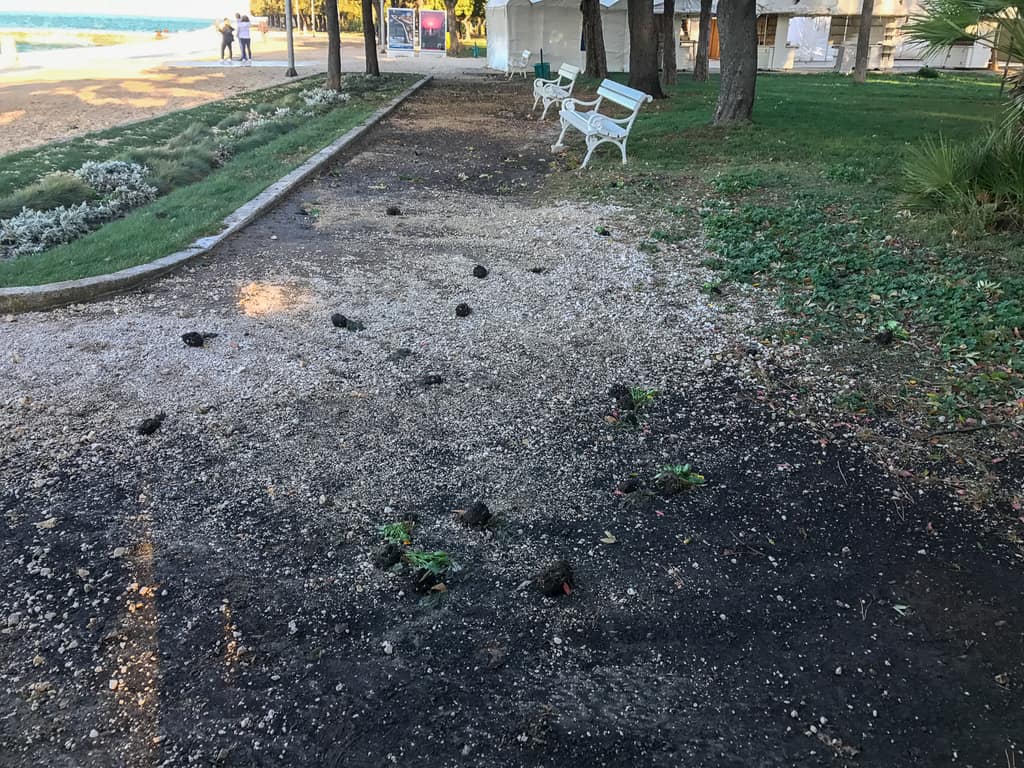
It did more damage in Italy than in Croatia, but Zadar still came out of it in pieces: leaves everywhere, the new flowerbeds torn up, parts of the city flooded, stonework along the coast damaged.
“no matter where in this world we go, we are forced to take the good with the bad. There is no such place as a true paradise on Earth.”
When it calmed enough to go out I went looking for the birds. They were being blown sideways. I could barely walk into the wind myself, and I watched them try to fly and get rolled back the other way. I found them. That is the part I am grateful for.
The hardest part of leaving was never the city. It was knowing the flock would come looking for me the next morning, and the morning after that.
“Leaving is hard. Leaving without being able to explain yourself is harder.”

“the rain helped hide my tears as I got on a bus to leave Zadar and the birds behind as I set off for my next destination.”
Almost everything I did you can still do. One thing you cannot.
In 2018 Croatia was my escape hatch from the Schengen clock. Since 1 January 2023 it is inside Schengen and it uses the euro, so that trick is dead — but there is a better one now, and it lasts eighteen months.
The whole reason I went to Croatia in 2018 was that it sat outside the Schengen Zone and my 90 days had run out. That workaround is gone.
Croatia joined the Schengen Area on 1 January 2023, the same day it adopted the euro. Croatian days are Schengen days now.
Source: European Commission
90 days in any 180, counted across the whole area. Hopping to Croatia to reset the clock no longer works.
Source: Council of the EU
Euros, not kuna. Old prices you read in kuna on this blog were about 7.5 kn to the euro.
Croatia runs one of the friendlier digital-nomad permits in Europe, and it is the loophole that replaces the one I used.
Temporary stay for digital nomads, now up to 18 months (it was 12 when the scheme launched in 2021).
Source: Ministry of the Interior
€3,622.50 a month, evidenced by a bank statement or six months of payslips — or €43,470 in the bank for 12 months, €65,205 for 18.
Source: Ministry of the Interior
You work for, or through, a company not registered in Croatia, and you do not work for Croatian employers.
Source: Ministry of the Interior
Time on a national residence permit does not count against your 90/180 Schengen allowance, so your days for the rest of Europe stay intact.
Source: Remote Work Europe
Online, through the Ministry of the Interior’s own portal.
Source: digitalnomadscroatia.mup.hr
Both are free, both are outdoors, and one of them finally works again.
Free, no ticket, no opening hours — the sea plays it around the clock. Nikola Bašić, opened to the public in April 2005.
Source: Wikipedia
The renovation that shut it the week I arrived finished in March 2019; the fence came off in February 2020. It is free, walkable and lit at night again.
Source: City of Zadar
300 glass panels, 22 metres across, generating about 46,500 kWh a year — roughly half the power the waterfront uses.
Source: Wikipedia
Zadar is small, walkable, and better connected than it was when I went.
Zadar Airport (ZAD) now runs around 61 destinations on 16 airlines, Ryanair heaviest. No direct flights from the US — you connect in Europe.
Source: FlightsFrom
The shuttle bus is €5 one way, about 20 minutes to the Old Town, bags included, and the ticket stays valid 90 minutes on city buses afterwards.
Source: Zadar Airport
About an hour and a half, roughly €7–13 one way. FlixBus from around €6.98; Arriva runs €9.90–12.90 on the day I checked.
Source: Arriva Croatia
Roughly €13 for a cheap restaurant meal, €2.21 for a cappuccino, €3 for a half-litre of draught beer, €1.60 for a bus ticket.
Source: Numbeo, June 2026
I got invited. You can book it — and you should go soon, because the thing I warned about in 2021 is happening faster than I expected.
October. Early harvest runs mid-to-late in the month, which is exactly when we picked.
Source: Total Croatia News
Olive Garden Resort at Jadrija runs a harvest stay — you pick in the private groves, follow the oil through the mill, and taste it. From about €80 a night for up to four.
Source: Jadrija Camp Resort
The Zadar Region tourist board lists working producers you can visit and taste at, from Pašman to Ravni Kotari to Ugljan.
Source: Zadar Region Tourist Board
Croatian olive oil output fell from about 63,000 hl in 2024 to under 46,000 in 2025, and in 2025 Croatia imported more olive oil than it produced for the first time. Producers blame drought and sustained heat above 35°C.
Source: Croatia Week, Aug 2026
St Donatus and the Roman forum column, in the middle of the old town.
If you only do three things
Sit on the Sea Organ steps at sunset with a book. Free, always on, and the best hour of the day in Zadar. Stay for the Greeting to the Sun afterwards — it works now, which is more than I got.
Go to the city market. Locals call it the breadbasket of the city. If you are staying a while, this is where you shop, not the supermarket.
Get out to a grove in October. I got invited, which I know is not a plan. But you can book it — the harvest tab has two places near Zadar and Šibenik that take visitors.

Everything I worked out the hard way.
Ninety-day Schengen maths, teaching online from an alleyway, what to carry, how to make a month somewhere feel like living rather than visiting. The Travel Field Guide is the short version of eight years of this.
All 12, in one place.
8 Feb 2021 · ZadarRevisiting Brighter Times… My Month in Zadar, CroatiaWhy a country I knew nothing about became the one that changed me most.Read the story 10 Feb 2021 · ZadarGreeting the Moon at Zadar’s Greeting to the SunThe light show I came for, switched off the day I arrived.Read the story 15 Feb 2021 · ZadarThe Stunning Symphony of Sounds from The Sea OrganThirty-five pipes in the pavement, played entirely by the Adriatic.Read the story 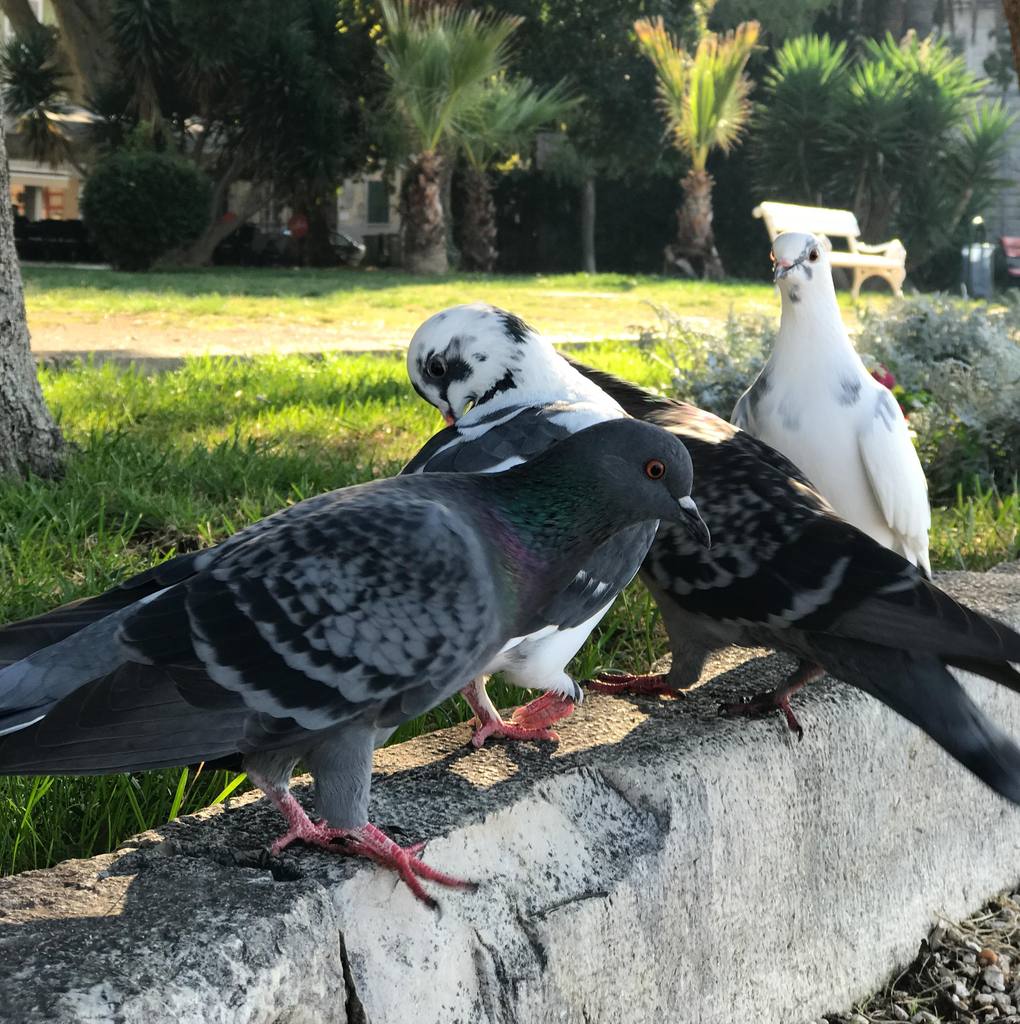 25 Feb 2021 · The flockCan You Befriend a Wild Pigeon?The whole story of Belle, Jesse, and a month of earning two birds’ trust.Read the story 3 Apr 2021 · The flockZadar: Where Birds Meow and Cats Perch in TreesA cat who lived up a tree, and gulls that sounded like cats.Read the story 9 Jul 2021 · ZadarTop 5 Foods You Must Try in Zadar, CroatiaTruffle gnocchi, black risotto, and the warning about first dates.Read the story 12 Jul 2021 · ZadarWhy Is There a Sphinx in Zadar? (Croatia)Europe’s largest sphinx, in a seaside garden, for love.Read the story 30 Sep 2021 · ŠibenikTeaching English Online In an Alleyway in ŠibenikA last-minute booking, a closed restaurant terrace, and a five-apple rating.Read the story 10 Oct 2021 · ŠibenikWhy You Shouldn’t Skip a Visit to Šibenik While Visiting CroatiaA city built by Croats, out of stone, that has outlasted nearly everything.Read the story 10 Nov 2021 · Plan it10 Things to Do When You’re Visiting Zadar, CroatiaThe short list, from the Roman Forum to the city market to the olives.Read the story
  14 Nov 2021 · The groveHow To Harvest Olives For Extra Virgin Olive OilEighty trees, 450 pounds, two dogs, and the best day of the whole trip.Read the story 28 Nov 2021 · LeavingThe Storm that Swept Over Zadar Before My DepartureThe weather that broke over Zadar two days before I had to go.Read the story
 Nothing matches that. Try “olive”, “pigeon” or “sea organ”.
Or browse the whole archive: Croatia on The Rocky Safari
Some trips are a list of places. This one was a list of names.
Belle. Jesse. Claro and Liway. A family with eighty olive trees whose surname I never learned how to spell. A cat who lived in a tree. I went to Croatia because my visa clock ran out, and it turned into the month I measure other months against.
“I’d like to think Belle and Jesse are still flying about happily living their best pigeon-lives in Zadar.”
This all happened in October 2018. The stories were first published in 2021 and are gathered here by experience rather than as a day-by-day itinerary. Prices and rules in the planning panel were checked in September 2026.