


Connecticut is not a state many people plan trips around. It sits between New York and Boston, both of which are louder about themselves, and most people I know have only ever experienced it through a windshield on I-95 with no intention of stopping. Not unlike New Jersey, where I’m from!
I ended up spending real time there, repeatedly, and I came away with a more complicated answer than I expected to have.
So here it is up front: yes, Connecticut is worth visiting — but not the way you’d visit Iceland or Japan. It is not a state you go to in order to see a list of things. It’s a state that pays off if you let the trip unfold slowly and go in with proper expectations for what you’ll find once you’re there.
Here’s what actually surprised me.
Why I kept finding myself in Connecticut
I had reason to make several trips there. I was dating a guy from Connecticut for quite some time. As you may have read on my blog in the past, that didn’t go quite so well and I haven’t been back in over three years. Still, I frequently think back to what a positive impression the people and general state of Connecticut left on me.
That’s the whole explanation. What matters for this post is the shape of those trips, because it’s unusual and it’s why I noticed things a normal visit wouldn’t surface. I wasn’t a tourist. I wasn’t working through an itinerary or trying to tick off the state’s ten biggest attractions. I was driving up from New Jersey, staying a while, going out to dinner, going to the stores, driving around neighborhoods, and driving home again.
That turns out to be a completely different way of finding out what a place is like. A weekend shows you a destination’s best angles. Repeat visits with nothing scheduled show you the place itself.
Connecticut was not what I pictured
For most of my life, Connecticut was one of those states that existed relatively close to me without giving me much of a reason to actually go there. So I didn’t have a strong concept of what it was like there at all.
If I’d had to guess, I’d have imagined it something like an extension of the New York suburbs. Commuter towns, expensive, manicured, busy. Fairfield County’s reputation does a lot of heavy lifting in how people imagine the whole state.
What I actually found, once I was past the commuter belt, was quiet. There was more land. Houses were farther apart. Properties seemed bigger. Things felt more rural without feeling isolated, and that combination — rural but not remote — is the thing I now think Connecticut is genuinely good at and gets no credit for.
As someone who has always imagined myself as a city boy, it was opening my eyes to a whole different way of life and… I loved it?
It’s surprisingly rural
For the first time in my life, I was able to imagine a life somewhere slower… and more quiet. A life drastically different from any I’d ever experienced before.
Things were quieter. Things were slower there. I half assumed I was inflating it in my head.
I wasn’t, particularly:
- People per square mile: Connecticut 745, New Jersey 1,263. Connecticut is the fourth densest state in the country, which sounds like it should feel crowded — until you notice New Jersey, the densest, packs 1.7 times as many people into every mile.
- Share of the state that is forest: Connecticut 55%, New Jersey 39%.
- Homes per square mile: Connecticut 322, New Jersey 520.
More forest, spread more thinly, with fewer front doors in it.
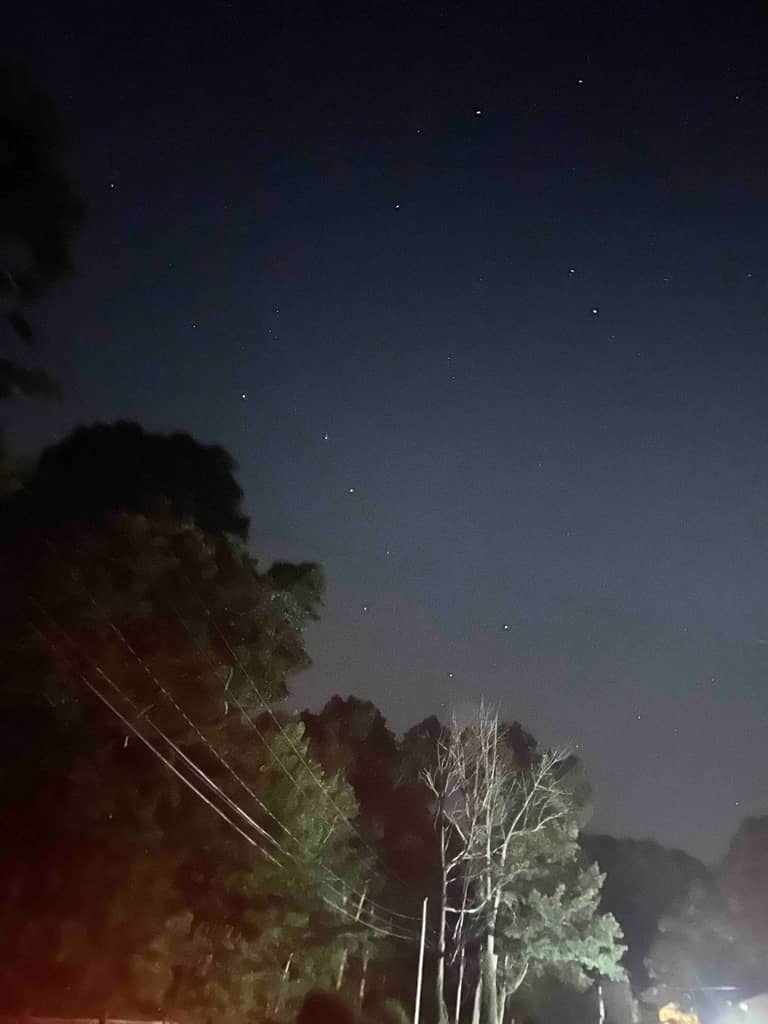
The part you actually feel, though, isn’t the statistic. It’s how much is alive in it.
Over the time I spent up there I saw deer, wild turkeys, a black bear, and a smaller predator crossing a road in front of me. I heard owls at night. There were hawks over the highway, woodpeckers and songbirds carrying on in the trees, herons and geese on the water. None of it is exotic — every animal on that list technically exists in New Jersey too. The difference was that I wasn’t looking for any of it. It was just there, on an ordinary evening, while I was driving to dinner or standing in a parking lot.
It made me feel a sense of shame that my home state of New Jersey has grown so distant from the nature that once filled it. We’ve cut down so many trees and filled it with human stuff… everywhere. How do we New Jerseyans even still call our home The Garden State in good conscience in 2026?
And then I went looking for why, and found the part of this that I think is genuinely remarkable: none of those woods are old.
By 1825 Connecticut was down to roughly 25% forest. It had been cleared for farms, pasture, firewood and charcoal — an open, agricultural, stone-wall landscape that would look nothing like what you drive through now. Then the farms were abandoned in the late 1800s, the trees grew back over them, and the state is about 58% forest today. The stone walls are still in there, running through the middle of what are now woods.
The animals came back with the trees. Black bears were gone from Connecticut by the mid-1800s and there are roughly 1,200 now. Wild turkeys were gone by the early 1800s; between 1975 and 1992 biologists released 356 wild-caught birds at 18 sites, and they’re now in all 169 Connecticut towns. So when a turkey walks across a road in front of you, it is, in a small way, the end of a very long project.
One genuinely practical note attached to all of this: Connecticut has around 110,000 white-tailed deer, logged 292 reported deer-vehicle collisions in 2023, and reckons roughly five more go unreported for every one that gets reported. If you’re driving those back roads at dusk, ease off through the trees. Please. 🥺
The people were noticeably friendly
The landscape wasn’t actually what surprised me most.
The people were.
I don’t even have one particular interaction I can point to, because it happened constantly. People greeted you. People held doors. Employees in stores seemed friendly. Strangers seemed more inclined to acknowledge one another. It was a collection of tiny interactions that eventually became impossible not to notice.
I love New Jersey. It’s my home state and there’s plenty about it I’ll defend. Our friendliness might not be top of that list. (Jersey drivers, I’m looking at you!)
I did go looking for whether this is a real measurable thing, and mostly what you find is junk — “friendliest states” rankings with no methodology, recycled endlessly by content farms. But the US Congress Joint Economic Committee built an actual Social Capital Index, and on it Connecticut comes 19th of fifty while New Jersey comes 30th. The distance is almost entirely in family interaction, where Connecticut is 11th and New Jersey 46th, and community health, where it’s 19th against 45th.
Exploring Danbury
Danbury is where I spent most of my time, and I want to be honest about what that was: not sightseeing. We’d go out for sushi and ramen. We’d wander around stores and the mall.
None of those things individually were monumental travel experiences. Collectively, though, they gave me something travel doesn’t always get enough credit for: the chance to find out what ordinary life feels like somewhere else. I was grocery shopping. I was driving through neighborhoods. I was there long enough to start noticing the small differences between everyday life there and everyday life at home.
In some ways that taught me more about Connecticut than a weekend of sightseeing would have.

Here’s what I’d actually point you at in that corner of the state, which I researched properly rather than pretending I did it all. Prices and hours were current in September 2026, so confirm before you go.
- Tarrywile Park & Mansion, Danbury. 722 acres, 21 miles of hiking trails, two ponds and a lake, on a former dairy farm and fruit orchard — more land that went back to being woods. Open daily, sunrise to sunset, free, leashed dogs welcome. Inside the city and costs nothing, which makes it the easiest good decision on this list.
- Candlewood Lake. Connecticut’s largest lake, and entirely man-made. The valley was flooded for hydroelectricity in 1928 and a small village called Jerusalem went under with it, along with four ponds and about a hundred buildings. The 4,500 acres of woodland were cleared by hand first.
- Squantz Pond State Park, New Fairfield. 172 acres on a natural pond joined to Candlewood, about twenty minutes north, and the easiest public access to that water. The catch matters: peak-season parking caps at 250 vehicles and then the park closes for the day. Free with Connecticut plates; out-of-state parking is $15 weekdays, $22 weekends, $7 after 4pm.
- Kent Falls State Park. A cascade dropping around 250 feet in total, with one 70-foot plunge, before it reaches the Housatonic. A real drive north up the valley rather than a quick stop, so treat it as the day. 8am to sunset; out-of-state parking $10 weekdays, $15 weekends; no swimming.
- Danbury Railway Museum, 120 White Street. In the restored 1903 station, with a ten-acre yard holding sixty-odd pieces of historic rolling stock and a working turntable. Saturdays and Sundays, 10am to 4pm, $10 for age three and up. Train rides run spring through October and cost extra.
- Danbury Fair. The mall we wandered around sits on the grounds of the actual Danbury Fair, which ran from 1869 to 1981 and drew almost 250,000 people in its final year — animal exhibits, amusement rides, and from the 1940s stock car racing on a banked speedway. The mall opened in 1986 and is now the city’s biggest taxpayer. I like that the parking lot has a history.
- Shepaug Bald Eagle Observatory, Southbury. Bald eagles gather below the dam on the Housatonic to fish open water in winter, and the power company runs a viewing area with blinds, spotting scopes and volunteers. December 21 to March 15, Wednesdays, Saturdays and Sundays. Free, but reservations are required. January is the peak, and it ran its 40th season this year.
The ordinary drives were sometimes the best part
This is the bit I did not see coming at all.
I came to appreciate having all of that time alone in the car. I’d put on music, drive through Connecticut and have an hour or more where there really wasn’t anything I needed to do except think.
There’s something I miss about that.
The usual route up is I-287, over the Governor Mario M. Cuomo Bridge, then I-684 north through Westchester before you pick up I-84 east into Danbury. Nothing about it is scenic until fairly late, and then all at once it is. Once you’re past Brewster the landscape stops being places and starts being terrain — the Western Highlands, the foothills of the Berkshires, a lot of oak.
The Cuomo Bridge toll is $7.25 with E-ZPass. How long the whole thing takes depends entirely on where you start and what the Cross Westchester Expressway is doing to you that day. That hour and a half drive is something I truly do miss.
If you’re the kind of person for whom a long quiet drive is a feature rather than a cost — and I’ve learned that I am — that stretch is genuinely one of the better things about going.
Connecticut vs. New Jersey: close geographically, very different feeling
These two states are about two hours apart and they are not remotely the same experience, which took me a while to be able to explain rather than just feel.
And here’s the complication that broke my own argument when I found it: New Jersey actually preserves more of its land than Connecticut does. Over 30% of it, against roughly 17%.
So the difference I was feeling on those drives was never about how much land gets set aside. It’s about how the rest of it gets used. New Jersey concentrates nine and a half million people into dense development next to big protected blocks, which means nature is somewhere you go — you drive to the Water Gap, you drive to the Pine Barrens. Connecticut spreads a third as many people thinly across the whole map, which means nature is the stuff between the houses.
One of those arrangements produces better parks. The other produces a turkey in your road on a Tuesday. If you’re deciding between them as a visitor, that’s the actual choice you’re making.
So, is Connecticut actually worth visiting?
Yes. With conditions, and I’d rather give you the conditions than the brochure.
What Connecticut is not: a big-ticket state. There is no single thing there that justifies a flight on its own. If your measure of a trip is how many famous sights you stood in front of, you will come home feeling like you got shortchanged, and you’d be right to.
It’s also not cheap. This is the part most “is it worth visiting” posts skip. Danbury’s median rent is $1,846 — higher than New Jersey’s statewide median of $1,720 and well above Connecticut’s own $1,488 — while Danbury’s median household income is lower than either state’s. Connecticut overall is cheaper than New Jersey. Fairfield County specifically is not, and it shows in what you’ll pay for a room and a dinner.
And you need a car. Metro-North’s Danbury branch does reach Grand Central, but you normally change at South Norwalk and it’s about two hours each way, with weekend service roughly every three hours. It’s a day-in-the-city line, not a way to get around the state.
With all of that said — here’s what’s actually there, including the parts I haven’t done myself and am telling you about because I checked, not because I’m pretending:
- New Haven apizza is a genuine, defensible reason to drive to Connecticut. Frank Pepe has been making it since 1925; it’s thin, oblong, charred, baked in coal-fired ovens above 650°F, and mozzarella is officially optional. Pepe’s invented the white clam pie. David Chang said on Ugly Delicious that New Haven as a community has the best pizza in America. This is not a local boast, it’s a national argument the state keeps winning.
- Mystic Seaport Museum on the eastern shoreline — a whole 19th-century seaport village plus the Charles W. Morgan, the last wooden whaleship in the world. $35 adults, $25 youth, daily 10am to 5pm.
- Gillette Castle, East Haddam. A 14,000-square-foot stone house built between 1914 and 1919 by William Hooker Gillette, the actor who defined Sherlock Holmes on stage. He designed all 24 rooms and 47 individually different doors himself. Grounds open daily 8am to sunset and free; castle tours $6 for 13 and up, seasonal.
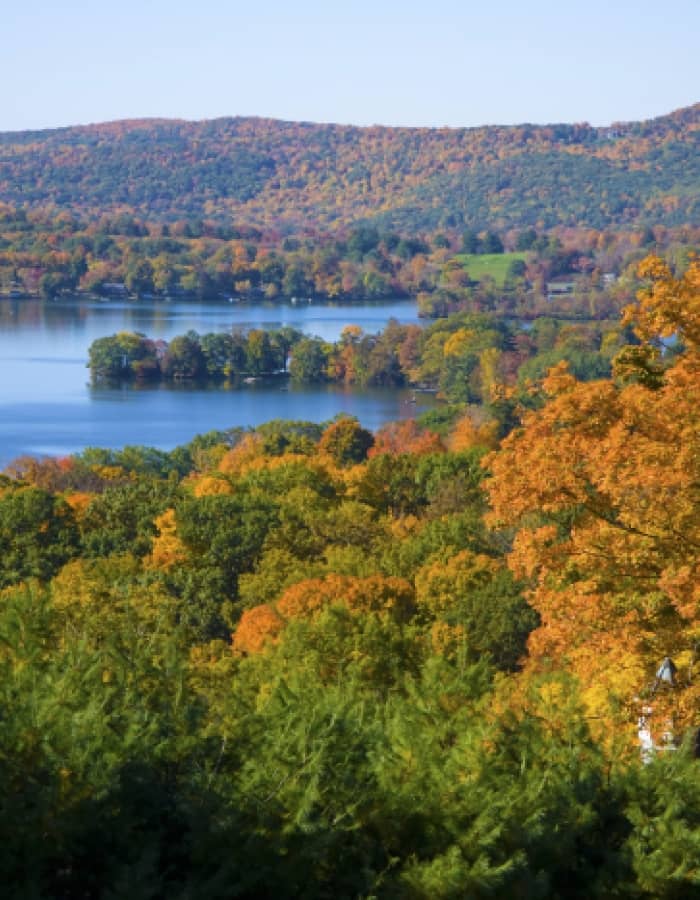
- The northwest hills in early October. Connecticut’s brightest color is generally early October, and the Litchfield Hills are where to be for it. This is the one time of year I’d say the state is straightforwardly, uncomplicatedly worth a trip.
- The wildlife, if you point yourself at it. The Shepaug eagle observatory in winter, Tarrywile or Kent Falls the rest of the year, and a free bird app (below) will get you further than most people expect from a state this small.
One free tool I’d actually pack: the Cornell Lab’s Merlin Bird ID. Download the regional pack before you go, and its Sound ID will tell you what you’re hearing in real time, offline, which is the situation you’ll actually be in out there. I heard owls on those trips and never found out which ones, because I didn’t have it yet. Don’t be me.
Who I think would love it
This is really the honest answer to the title. Connecticut isn’t for everyone and it doesn’t pretend to be, which I’ve come to think is a point in its favor.
You’ll love it if:
- You’re chasing work-life balance rather than sightseeing. If your ideal week is long uninterrupted stretches of work, a window with something in it, and a trailhead ten minutes away, this is close to ideal. It’s the rare place that’s genuinely quiet while still being two hours from New York.
- Long drives are a feature for you, not a cost. Some people arrive at a destination. Some people like the getting there. This state rewards the second kind.
- You want fall foliage without the Vermont crowds. Early October, northwest hills, and a fraction of the traffic.
- You notice animals. Birders especially. There is a lot more moving around out there than the map suggests.
- You’d rather understand a place than photograph it. Connecticut gives up its good stuff slowly and mostly through ordinary days.
You’ll be bored if:
- You want nightlife, or a city with real energy to it. Go to New York, it’s right there.
- You’re traveling without a car.
- You measure a trip in landmarks. You will run out in about a day and a half.
For me, the surprise wasn’t any one thing I saw. It was that a state I’d spent my whole life ignoring, forty-five minutes past the New York suburbs, turned out to be quieter, greener, friendlier and considerably more alive than I’d assumed — and that I only found that out because I stopped treating it like a destination and started treating it like somewhere people live.
If moving farther north didn’t also mean volunteering for even colder winters, it’s somewhere I could genuinely imagine living. I haven’t spent much time there since 2023. I’d like to go back.
🙂