

Three summers ago, I visited the Chuang Yen Monastery in Carmel, New York. At the time, I had no idea how much that trip would stick with me—not just because of the peacefulness we found there, but because of the subtle emotional clarity that began to take root during that visit.
Finding Stillness in Upstate New York at Chuang Yen Monastery
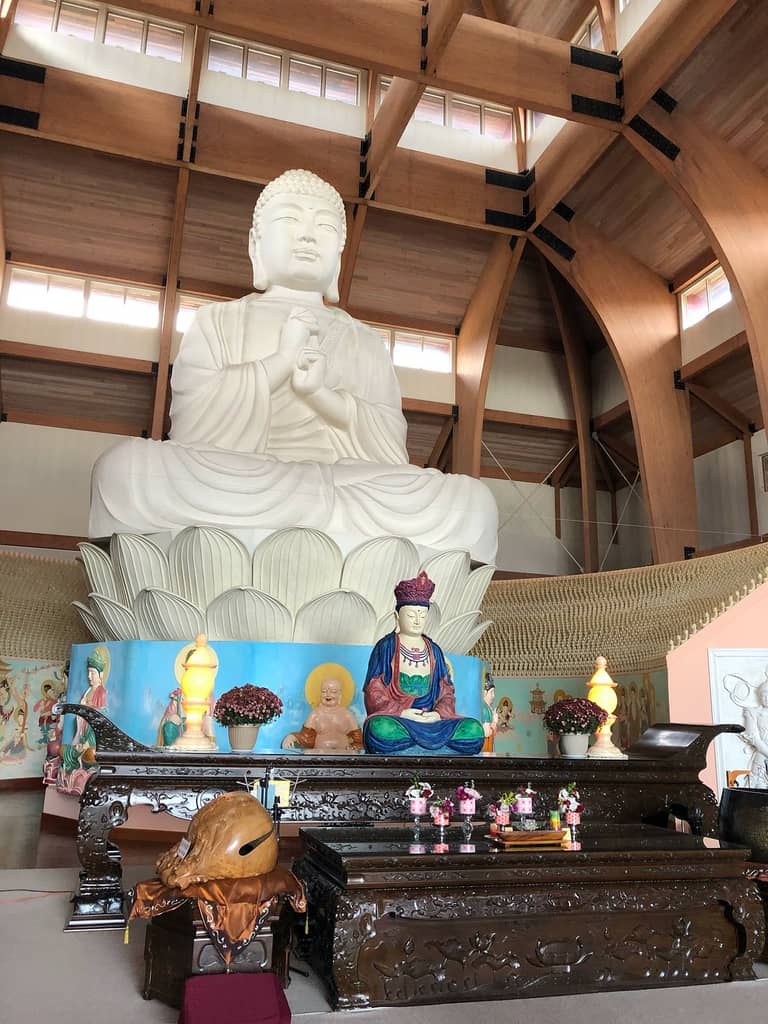
Set on 225 acres of rolling hills and forested land, Chuang Yen Monastery is home to the largest indoor Buddha statue in the entire Western Hemisphere—a 37-foot-tall marvel that is impossible to forget.
Even more than that, it’s a place of quiet introspection, spiritual openness, and deep connection with nature. The visit was inspired by my boyfriend at the time who knew it was somewhere I would enjoy visiting. During that weekend, it gave both of us something we hadn’t even realized we needed: space to just be.
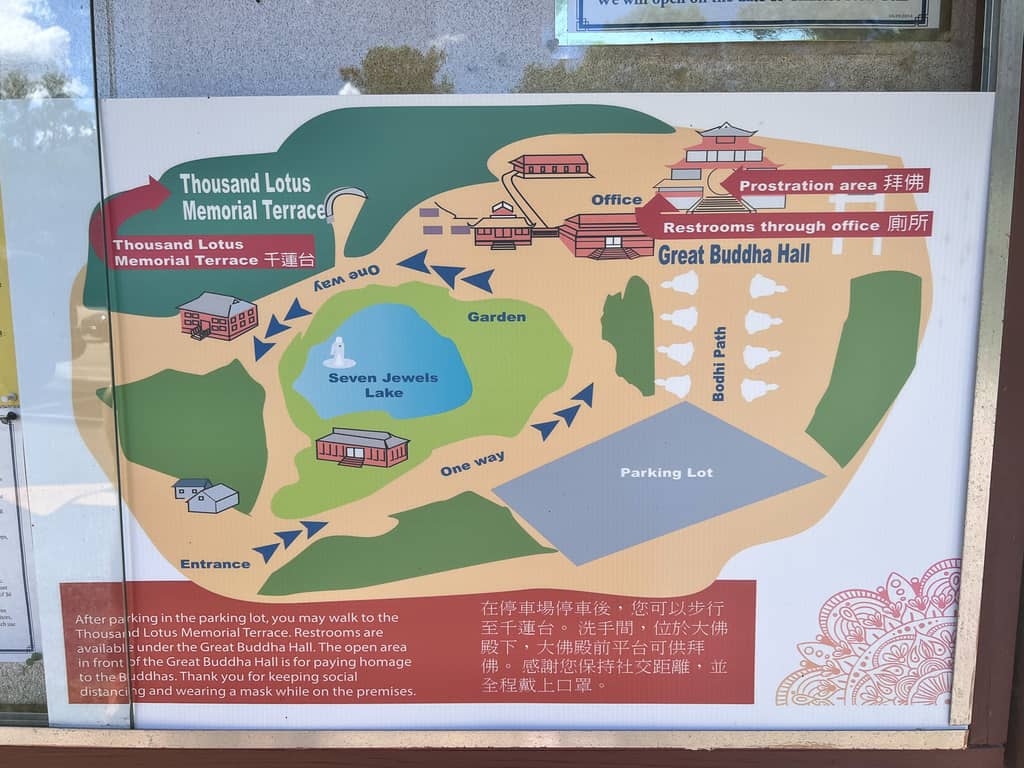
Carmel is just over an hour’s drive from Connecticut, which was where we were leaving from at the time. Similarly, it’s not far from New Jersey, New York, or any surrounding areas. As we got closer to the monastery, the roads became narrower, the air cleaner, the landscape greener.
First Impressions: Entering Sacred Ground
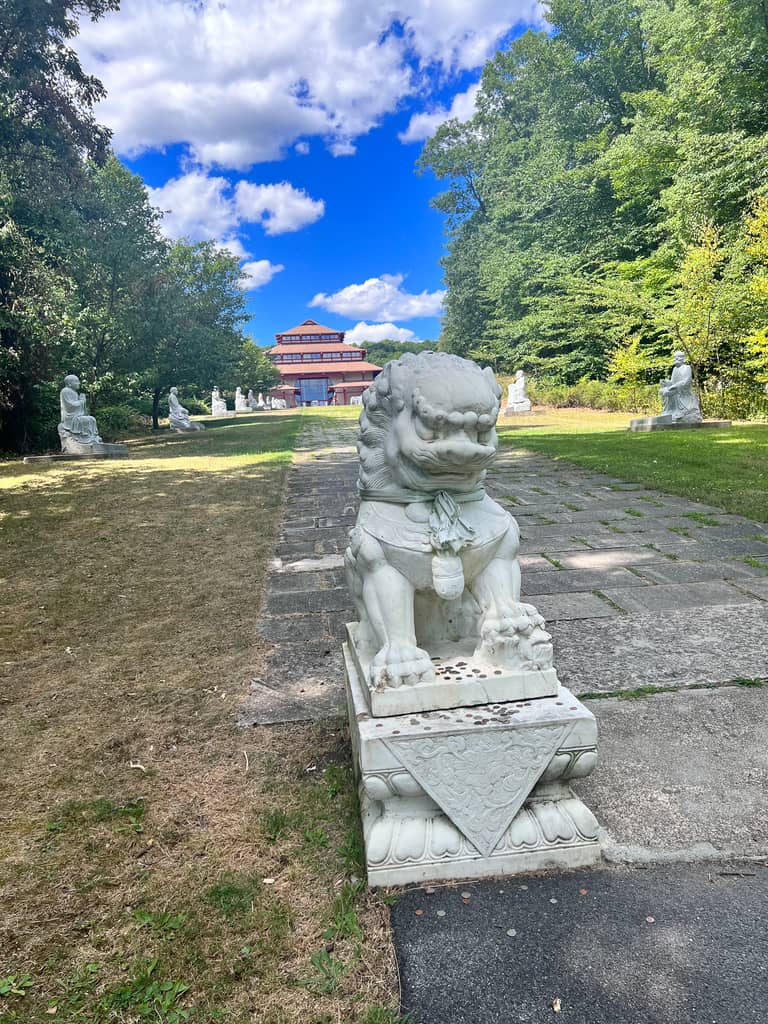
The moment we arrived, the tone of the day changed. Passing under the tall entrance gate engraved with traditional Chinese characters, I felt a wave of stillness settle over me. It’s not often that a place feels instantly sacred, but Chuang Yen Monastery has that effect. The monastery buildings are scattered throughout the property, giving visitors the space to explore, wander, and reflect at their own pace.

We stepped out of the car and onto the stone path that leads toward the main campus, where the smell of incense lingered in the air and birds chirped from the treetops. Right away, I knew this wasn’t going to be a quick walk-through—it was the kind of place you settle into.
The Largest Indoor Buddha in the Western Hemisphere
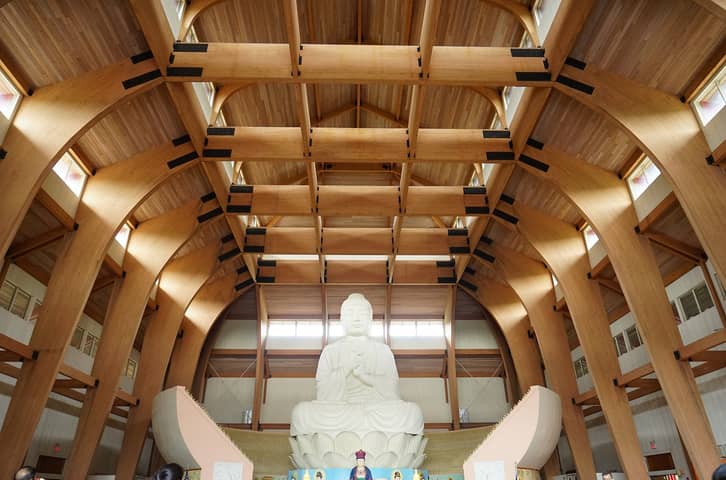
Walking into the Great Buddha Hall is an experience that’s hard to prepare for. Towering at 37 feet tall, the Buddha statue inside is the largest indoor statue of its kind in the entire Western Hemisphere. It sits serenely in the lotus position, encircled by thousands of smaller Buddha statues lining the curved walls around it.
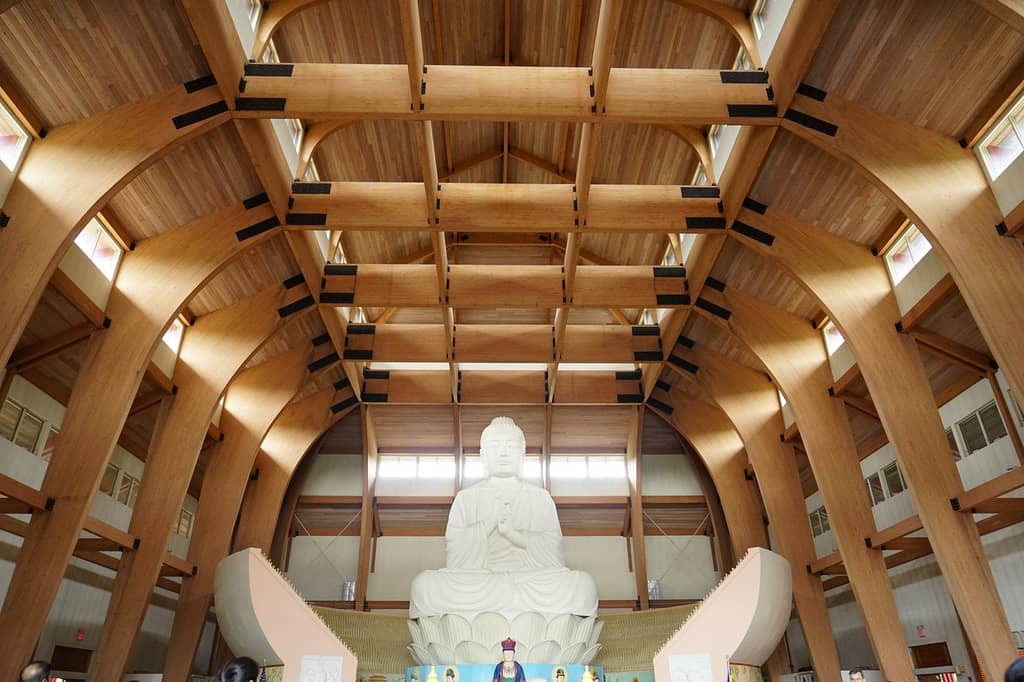
The hall itself is expansive and reverent. You remove your shoes before entering. The interior is cool and dim, with light filtering softly through windows high above. There are no pews—just meditation cushions arranged neatly across the wooden floor. Visitors come and go quietly, some bowing, some sitting in meditation, others simply standing in silent awe.
We stayed there for a while, longer than I expected. I sat cross-legged, just taking in the scene. The energy was grounding—there’s a calm heaviness in that space, as if every breath echoes off the massive statue’s stillness. Even though I don’t consider myself a practicing Buddhist, the peace I felt there transcended labels.

I certainly did not feel like I was in New York while on the property. The architecture was spectacular and reminded me so much of the temples I saw in China.
Wandering the Grounds: Time Outdoors Among Nature
After spending time inside the Buddha Hall, we stepped back out into the warmth of the afternoon sun and began exploring the monastery grounds. That’s when the day truly began to unfold.

We spent hours outdoors, walking slowly along the winding trails that connect the various parts of the property. We paused frequently to admire the details: stone carvings of bodhisattvas tucked into the trees, plaques etched with Buddhist teachings, butterflies floating past us in the August heat.

Eventually, we made our way to one of the most peaceful spots on the property: the lotus pond.
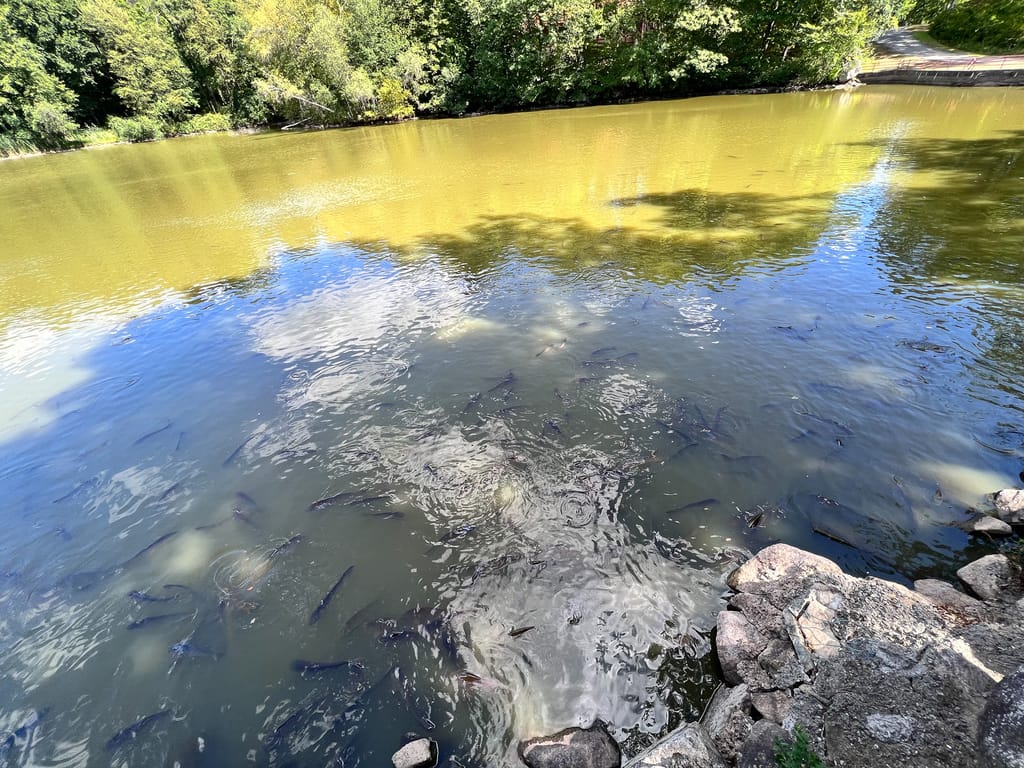
Dark koi fish swam beneath the surface, their smooth movements mesmerizing to watch. We sat side-by-side on a bench, eyes fixed on the pond, saying nothing. The occasional sound of wind through the trees or a ripple in the water was all we heard.

That moment is one I’ve replayed in my mind many times. Not because it was particularly eventful—but because of how present we both felt. The connection in that silence spoke volumes.
The Memorial Wall: A Quiet Place of Remembrance
One of the areas that stood out to me most—though perhaps less mentioned by casual visitors—was the memorial wall. Along one path, we came upon a long structure covered in tiles, each inscribed with names and messages. Some had Chinese characters; others included English translations. Each tile represented a person—someone remembered, honored, loved.

It was a striking thing to see: rows upon rows of names, some faded, others newly etched. The wall was peaceful, contemplative. We walked the entire length of it slowly, stopping now and then to read a name or message that caught our eye.
There was something deeply human about it. It reminded me how this place isn’t just for the living—it’s also a space where people come to remember, to grieve, and to celebrate lives that have come before.
Lunch and the Library: More Than a Spiritual Visit
By early afternoon, we made our way to the Dining Hall, where the monastery generously offers free vegetarian lunches on weekends. The line moved quickly, and we each filled our plates with a simple, nourishing meal: steamed rice, stir-fried vegetables, tofu, and hot tea. We sat among other visitors at long communal tables, eating mostly in silence. That quiet was never awkward—it felt intentional. Respectful.

After lunch, we wandered into the Woo Ju Memorial Library, located on the property. The collection of books is impressive, covering topics ranging from Buddhist philosophy and meditation to Eastern languages and cultural studies. Even if you’re not deeply spiritual, the intellectual curiosity this space invites is undeniable. I picked up a few books, thumbed through pages, and made a mental note to return another time for deeper reading.
Looking Back: What That Trip Taught Me
It’s been three years since that August afternoon, and though so much has changed—my relationship, where I live, how I travel—this visit remains clear in my memory. In fact, the further removed I become from that weekend, the more I’ve come to appreciate what it offered me.

At the time, my partner and I didn’t know we were nearing the end. But as I reflect on it now, that visit to Chuang Yen felt like a soft ending—one filled with quiet gratitude, stillness, and the beginnings of acceptance.
The monastery didn’t solve anything for us, but it gave us a rare moment of alignment—a pause in the noise, where we could hear ourselves and each other more clearly.

It gave us peace. And maybe, without realizing it, that was exactly what we both needed to move forward.
If You Plan to Visit: Here’s What to Know
If you’re considering a trip to Chuang Yen Monastery, here are a few helpful tips to make the most of your visit:
- 🪷 It’s free to visit! No admission fee is required, though donations are welcome and appreciated.
- 🧘 The Great Buddha Hall is open to all visitors—regardless of background, religion, or beliefs.
- 👕 Wear modest clothing, especially if you plan to enter any of the prayer halls.
- 🥗 Free vegetarian lunch is usually served on weekends, typically around 11:30 AM to 1:00 PM. Arrive early to ensure availability.
- 📖 Don’t miss the library—especially if you’re interested in Buddhism, Eastern philosophy, or cultural studies.
- 🐟 Bring time and patience to sit by the lotus pond and watch the koi fish.
- 🧱 Visit the memorial wall and take a moment to reflect on the lives remembered there.
There are no loudspeakers, no tour guides, and no pressure. Chuang Yen invites you to wander, reflect, and engage at your own pace. It’s more than a destination—it’s a sacred space for presence.

Final Thoughts
Chuang Yen Monastery isn’t flashy. It doesn’t seek to impress. But in its quiet grandeur—in the shadow of the largest indoor Buddha statue in the Western Hemisphere—it offers something increasingly rare in our fast-paced world: stillness.

Whether you visit with a partner, a friend, or on your own, I hope you find what I did that day: a moment of clarity, a breath of peace, and the beauty of simply being.


What a wonderful place to visit. It sounds so peaceful.
It was very zen! 🙂